Aug 13, 2026
The 10 Best Plug-in Hybrid SUVs in Canada
Plug-in hybrid SUVs had a rough year in Canada. Jeep walked away from the 4xe entirely, Ford is winding down the Escape, and Lincoln's going with it. But the SUVs that stuck around got better: longer range, more power, and a new class of seven-seat PHEVs that didn't really exist a few years ago. Here's our updated list for 2026.
TL;DR
The plug-in hybrid SUV lineup in Canada changed more in the past year than in the previous five combined. Jeep discontinued the Wrangler 4xe and Grand Cherokee 4xe entirely as Stellantis exits PHEVs in North America, and the Ford Escape PHEV (along with the Lincoln Corsair Grand Touring) is in its final production year. On the plus side, the Toyota RAV4 Plug-in Hybrid (formerly the RAV4 Prime) got a bigger battery and now leads the segment with 80 km of electric-only range, and there are genuinely good seven-seat options now in the Kia Sorento PHEV and Mazda CX-90 PHEV. Below, we rank the 10 best plug-in hybrid SUVs you can actually buy new in Canada right now, plus dedicated breakdowns for the longest range, best AWD, and best 7-seater PHEVs.
Key Takeaways
- The Toyota RAV4 Plug-in Hybrid now offers up to 80 km of electric range, the longest of any PHEV SUV sold in Canada for 2026
- Jeep has discontinued the Wrangler 4xe and Grand Cherokee 4xe for 2026 as Stellantis exits plug-in hybrids in North America
- The Ford Escape PHEV and Lincoln Corsair Grand Touring PHEV are both in their final model year, with production already wound down
- The Kia Sorento PHEV and Mazda CX-90 PHEV are the two strongest options if you need three rows of seating with a plug
- Almost every PHEV SUV in Canada comes standard with all-wheel drive; the Ford Escape PHEV is the notable front-wheel-drive exception
- Electric range and fuel consumption figures below are based on Natural Resources Canada (NRCan) ratings, where available
In This Article
- What's Changed in the PHEV SUV Market for 2026
- Quick Refresher: What Is a Plug-in Hybrid?
- The 10 Best Plug-in Hybrid SUVs in Canada
- Best 7-Seater PHEV SUVs in Canada
- Best AWD PHEV SUVs in Canada
- Longest-Range PHEV SUVs in Canada
- How to Choose the Right PHEV SUV
- FAQ
What's Changed in the PHEV SUV Market for 2026
If you looked at this list a year ago, about a third of it no longer applies. Stellantis confirmed in early 2026 that it's ending all plug-in hybrid production in North America, which means the Jeep Wrangler 4xe and Grand Cherokee 4xe, once the two best-selling PHEVs in the segment, are gone. Both nameplates continue as gas and mild-hybrid models, just without the plug.
Ford's exit is more gradual. The Escape PHEV and its Lincoln Corsair Grand Touring twin are both wrapping up after the 2026 model year as Ford retools its Louisville, Kentucky plant for EV production. Dealers still have new 2026 inventory of both, so they're worth a look if the price is right, but there won't be a 2027 version of either.
On the other side of the ledger, Toyota completely reworked the RAV4 Plug-in Hybrid's powertrain for 2026 (Toyota has quietly dropped the "Prime" name, though you'll still see it used interchangeably), pushing electric range up 20% to 80 km. Mitsubishi grew the Outlander PHEV's battery too, and Mazda cut PHEV pricing on the CX-70 and CX-90 to qualify for the federal Electric Vehicle Affordability Program (EVAP). If you want the full picture on how that program works, our guide to the cheapest electric cars in Canada breaks down current EVAP eligibility.
Quick Refresher: What Is a Plug-in Hybrid?
Plug-in hybrid (PHEV): a vehicle with a gas engine, an electric motor, and a battery large enough to be charged from an outlet, not just from regenerative braking. A PHEV can drive on electric power alone for a set range, then automatically switches to gas-electric hybrid operation once the battery is depleted.
A regular hybrid recharges its small battery only through regenerative braking and the gas engine; you never plug it in. A PHEV has a much bigger hybrid battery that you charge overnight on a standard outlet or Level 2 charger, and it'll cover most Canadians' daily commute on electric power before the gas engine ever needs to fire up. Once the battery runs low, the vehicle behaves like a conventional hybrid, so you're never stranded the way you could be in a fully electric vehicle. For a deeper explanation, including how PHEV charging times depend on the onboard charger and outlet type, see our guide to plug-in hybrid vehicles and how they work.
All the range and fuel consumption numbers in this article are Natural Resources Canada (NRCan) ratings where the automaker publishes them. Actual range depends on temperature, driving style, and how consistently the vehicle gets plugged in, so treat these as a benchmark for comparison rather than a guarantee. When fully charged, most of the SUVs below will handle a typical daily commute on battery power alone before automatically switching over to gas-electric hybrid operation, routing power through an 8-speed automatic or CVT-style transmission depending on the brand.
The 10 Best Plug-in Hybrid SUVs in Canada for 2026
We ranked these from good to best overall, weighing price, electric range, power, seating, and how much SUV you actually get for the money rather than any single overall score. A few are on borrowed time as discontinued models, and we've flagged those clearly.
10) Lincoln Corsair Grand Touring PHEV – compact luxury SUV (final model year)

Lincoln Corsair Grand Touring - Lincoln Canada
Who is this for? Buyers who want a genuinely upscale small SUV and don't mind that this is the last year it'll be made.
Why we like it:
- Standard all-wheel drive and a quiet, well-finished cabin that punches above its price
- 226 combined horsepower from its 2.5L plug-in hybrid powertrain
- Dealers are motivated to move remaining inventory, which means room to negotiate
The Corsair Grand Touring is Lincoln's only plug-in hybrid, and it's going away with the Ford Escape it's built alongside. That's a shame, because it's a genuinely nice small luxury SUV: standard AWD, an available panoramic roof, and combined fuel consumption around 3.1 Le/100 km once you're in hybrid mode. Fuel consumption on gas alone runs about 7.1 L/100 km. If you can find a well-optioned 2026 model at the right price, it's worth cross-shopping against the Volvo XC60 below.
9) Ford Escape PHEV – compact SUV (final model year)

Ford Escape PHEV - jetcityimage - stock.adobe.com
Who is this for? Budget-focused buyers who don't need all-wheel drive and want to catch the last year of Ford's PHEV.
Why we like it:
- The most affordable PHEV SUV on this list, with an MSRP around $41,599 before incentives
- Still EVAP-eligible for a $2,500 federal rebate
- Standard Apple CarPlay and Android Auto
Unlike almost everything else here, the Escape PHEV is front wheel drive only, which is the main reason it's this far down the list rather than a value pick, even though the lack of an AWD system gives it significantly better fuel economy and overall fuel efficiency than most of its AWD rivals once the battery's depleted. Ford ended Escape production in December 2025, so what's on dealer lots now is the last of it. Ford has committed to supporting the Escape with parts and service for at least a decade, so ownership shouldn't be a headache, but budget for the fact that resale value on a discontinued nameplate tends to soften faster than average.
8) BMW X5 xDrive50e – mid-size luxury SUV

BMW X5 xDrive50e - jetcityimage - stock.adobe.com
Who is this for? High-income buyers who want full-size luxury and performance and don't want to compromise on either for the sake of efficiency.
Why we like it:
- 483 combined horsepower, the most power of anything on this list
- xDrive all-wheel drive with an electric rear motor that keeps AWD engaged in electric mode
- Bowers & Wilkins sound system and a genuinely premium interior
The X5 xDrive50e replaced the old xDrive45e for 2026, and it's a serious step up: nearly 500 combined horsepower, a 0–100 km/h time in the mid-4-second range, and the usual BMW options list. Starting MSRP is around $98,500 before freight, climbing well past $100,000 with the M Sport package. It's the most expensive and least practical vehicle on this list by a wide margin, but if budget isn't the deciding factor, nothing else here matches its combination of speed and comfort.
7) Volvo XC60 Plug-in Hybrid – compact luxury SUV

Volvo XC60 Plug-in Hybrid - jetcityimage - stock.adobe.com
Who is this for? Buyers who want Scandinavian design and safety tech in a size smaller than the X5, without giving up much range or power.
Why we like it:
- Up to 56 km of NRCan-rated electric range, among the best in the luxury segment
- 401 combined horsepower and standard AWD
- Google built-in with a charging station locator baked into the native navigation
Volvo quietly dropped "Recharge" from the name starting with the 2025 model year, so you'll see this listed simply as the XC60 plug-in hybrid, though it's the same car people still search for as the XC60 Recharge. For 2026 it picked up a refreshed exterior and a new centre display. Pricing starts in the high-$60,000s and climbs from there. NRCan notes that actual range, energy consumption, and charging times depend on outside temperature and battery condition, which is worth keeping in mind for anyone shopping in a colder province.
6) Mazda CX-70 PHEV – mid-size, two-row SUV

Mazda CX-70 PHEV - dennizn - stock.adobe.com
Who is this for? Buyers who want three-row-SUV interior space and cargo room but don't need, or want to pay for, the third row.
Why we like it:
- Same footprint as the three-row CX-90, but with more cargo room since there's no third row to fold
- Up to 51 km of electric range and standard AWD
- Leather-trimmed seats and a genuinely upscale cabin for the price
Mazda cut CX-70 PHEV pricing in June 2026, dropping the entry point to $48,999, specifically so it would qualify for the federal EVAP rebate. That's a meaningful move: the CX-70 PHEV is essentially a stretched, two-row version of the CX-90, which means a spacious interior and a genuinely large cargo area behind the second-row seats, big enough for hockey gear or a loaded weekend trip without folding anything down. It's a solid alternative to the Volvo XC60 above if you want more room for the same general price range.
5) Hyundai Tucson Plug-in Hybrid & Kia Sportage Plug-in Hybrid – compact SUVs

Hyundai Tucson & Kia Sportage Plug-in Hybrid - jetcityimage & VanderWolf Images - stock.adobe.com
Who is this for? Budget-minded families who want a lot of standard tech and a spacious interior without stretching into luxury pricing.
Why we like it:
- Dual-screen tech setup, heated front seats, and standard AWD across the lineup
- Strong reliability scores from both brands in recent years
- Loaded top trims (Tucson PHEV Limited, Sportage PHEV) still land under $49,000
These two are mechanically near-identical under different sheet metal, and they remain the value play in the compact PHEV class. Electric range on both sits in the low-to-mid 30 km range, noticeably short of the RAV4 or Outlander below, so this isn't the pick if daily electric-only commuting is your main goal. Where they win is everywhere else: standard features, warranty coverage, and a spacious interior that doesn't feel like an entry-level compromise.
4) Mitsubishi Outlander PHEV – compact/mid-size SUV, up to 7 seats

Mitsubishi Outlander PHEV - WE_S - stock.adobe.com
Who is this for? Families who want three-row flexibility and don't want to spend luxury-SUV money to get it.
Why we like it:
- Up to 72 km of electric range, second-longest on this list after the RAV4
- One of the only PHEVs in Canada that supports DC fast charging
- Available with a third row for occasional 7-seat use
The 2026 Outlander PHEV got a genuine mid-cycle refresh: a bigger 22.7 kWh battery (up from 20 kWh), an 18% range bump to 72 km, a redesigned interior, and updated exterior styling. Combined output is 248 horsepower from the 2.4L engine and twin electric motors, with standard S-AWC all-wheel drive. Pricing starts around $50,498. Fuel consumption once the battery's depleted runs about 8.6 L/100 km in the city and on the highway, which is average for the segment rather than exceptional, but the range and fast-charging support make up for it.
3) Kia Sorento Plug-in Hybrid – mid-size SUV, 6 seats

Kia Sorento Plug-in Hybrid - Kia Canada
Who is this for? Families who want three rows of genuine comfort, not just an emergency third-row squeeze.
Why we like it:
- Six-passenger seating with second-row captain's chairs standard
- Up to 55 km of electric range and standard on-demand AWD
- Available digital key lets you use your phone instead of a fob
The Sorento PHEV is Kia's answer to families who've outgrown a compact SUV but don't want to go full-size. It comes standard with six-passenger seating rather than a cramped seven, which most families with car seats will actually prefer. Cargo space behind the front row runs up to 2,139 L with the rear seats folded, and the cabin holds up well against three-row rivals costing considerably more. Pricing starts in the low-$50,000s and climbs into the low-$60,000s for the loaded SX trim.
2) Mazda CX-90 PHEV – mid-size SUV, up to 8 seats

Mazda CX-90 PHEV - jetcityimage - stock.adobe.com
Who is this for? Families who want the most engaging drive of any 3-row PHEV without sacrificing seating capacity.
Why we like it:
- 323 combined horsepower, sportier and quicker than most three-row competitors
- Seats up to 8, more than most PHEV SUVs in this class
- Now EVAP-eligible after Mazda's June 2026 price cut to $49,999
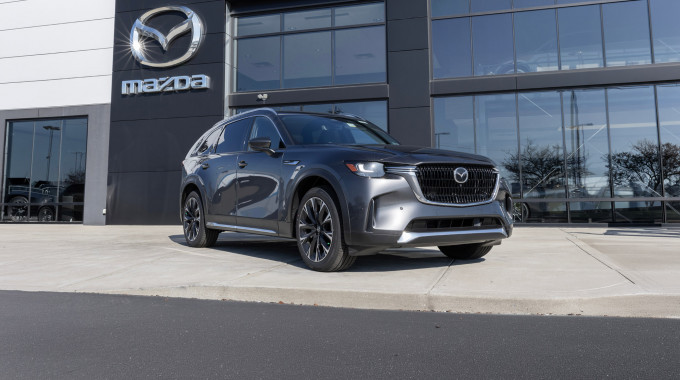
Mazda built the CX-90 as its flagship three-row SUV, and the PHEV version is genuinely fun to drive in a segment that usually prioritizes comfort over engagement. Mazda's torque-vectoring AWD system, plus a Kinematic Posture Control system borrowed from the MX-5, makes a big SUV feel noticeably more agile than its size suggests. Electric range tops out around 42 km, shorter than the Sorento or Outlander, but the combination of power, seating flexibility, and driving feel is hard to match at this price.
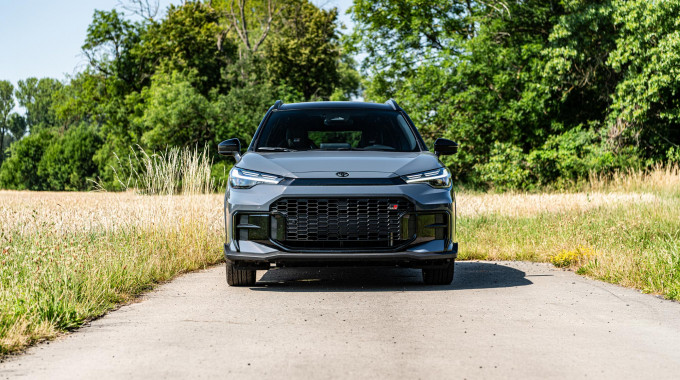
1) Toyota RAV4 Plug-in Hybrid – compact SUV

Toyota RAV4 Plug-in Hybrid - jetcityimage - stock.adobe.com
Who is this for? Anyone who wants the longest electric range, standard AWD, and Toyota's reputation for reliability and resale value, in one package.
Why we like it:
- Up to 80 km of electric range, the longest of any PHEV SUV in Canada
- 324 combined horsepower, up 22 hp over the outgoing generation
- Standard AWD and wireless Apple CarPlay and Android Auto
Toyota rebuilt this plug-in hybrid version of the RAV4 from the ground up for 2026, and the result is the clear leader in this segment. The battery grew to 18.1 kWh, electric range jumped 20% to 80 km, and horsepower climbed to 324, all while the starting MSRP actually dropped to $48,750, nearly $3,000 less than the outgoing model. You still get everything that made the old RAV4 Prime popular: standard AWD, a roomy and practical interior, and Toyota's dependability record. Combined driving range on a full tank and a full charge approaches 1,000 km. If you're comparing it to the standard RAV4 Hybrid, our guide to the most fuel-efficient SUVs in Canada lays out the trade-offs between the two.
Best 7-Seater PHEV SUVs in Canada for 2026
Three-row plug-in hybrids used to be a short list. That's changed. If seating for six or more is a requirement, these are your strongest options, in order:
- Mazda CX-90 PHEV – seats up to 8, the most of any PHEV SUV in Canada, with the sportiest driving feel of the group
- Mitsubishi Outlander PHEV – available with a third row, plus the longest range of any 7-seat PHEV at up to 72 km
- Kia Sorento PHEV – standard 6-passenger seating with captain's chairs, prioritizing comfort over maximum capacity
A quick note if you're cross-shopping: Volvo also builds a plug-in hybrid version of the XC90 with 6- or 7-seat configurations, but Canadian PHEV pricing and trim availability weren't confirmed as this article was updated, so we've left it off the main ranking. Worth a look if a three-row Volvo is on your list, but confirm PHEV availability with a dealer before you get attached to the idea.
Best AWD PHEV SUVs in Canada for 2026
Almost every plug-in hybrid SUV sold in Canada now comes with standard all-wheel drive. The Ford Escape PHEV is the one notable front-wheel-drive holdout, which is part of why it's priced so far below everything else on this list. A few are worth calling out specifically for how their AWD systems work:
- BMW X5 xDrive50e – uses an electric rear-axle motor that can maintain all-wheel drive even in full electric mode, not just when the gas engine is running
- Volvo XC60 Plug-in Hybrid – similar setup to the BMW, with a combustion engine driving the front wheels and an electric motor powering the rear axle
- Mazda CX-90 & CX-70 PHEV – a more traditional torque-vectoring AWD system tuned for on-road handling rather than off-road capability
If winter driving is the priority rather than outright performance, don't overlook the basics: heated seats, a heated steering wheel, and good winter tires matter more day-to-day than which AWD system is technically most sophisticated. Our guide to the best winter cars and SUVs covers what actually makes a difference on snow and ice.
Longest-Range PHEV SUVs in Canada for 2026
Electric range is usually the single biggest factor in how much gas a PHEV owner actually burns, since it determines whether your daily commute happens on electricity alone. Here's how the field stacks up, based on NRCan-rated or manufacturer-published figures:
| SUV | Electric Range (NRCan-est.) | Combined Power |
|---|---|---|
| Toyota RAV4 Plug-in Hybrid | 80 km | 324 hp |
| Mitsubishi Outlander PHEV | 72 km | 248 hp |
| Volvo XC60 Plug-in Hybrid | 56 km | 401 hp |
| Kia Sorento PHEV | 55 km | ~265 hp |
| Mazda CX-70 PHEV | 51 km | 323 hp |
| Mazda CX-90 PHEV | 42 km | 323 hp |
| Kia Sportage PHEV | ~33 km | 261 hp |
| Hyundai Tucson PHEV | ~32 km | 261 hp |
The RAV4 Plug-in Hybrid's lead here isn't close. At 80 km, most Canadian commuters could plausibly drive all week on electricity alone, plugging in overnight, and rarely touch the gas engine except on longer trips. The Outlander PHEV is the strongest runner-up, especially if you also need occasional third-row seating.
How to Choose the Right PHEV SUV
A few things worth thinking through before you commit to a specific model:
- How far is your commute? If it's under 40–50 km round trip, almost any PHEV on this list will get you through most days on electricity alone. Longer commutes make the RAV4's 80 km range or the Outlander's 72 km meaningfully more valuable.
- Do you have reliable access to charging? A PHEV you never plug in is just a heavier, less efficient gas SUV. If home or workplace charging access is uncertain, the electric range advantage of any of these vehicles shrinks fast.
- How many seats do you actually need? Don't pay for a third row you'll use twice a year. The Sorento's 6-seat layout or a two-row option like the CX-70 might suit real-world use better than a rarely-used 7th seat.
- What are you comparing trims on? Higher trims often add items like larger wheels (sometimes lighter forged wheels on performance-oriented packages), upgraded audio, and additional driver-assist tech. Optional packages can move the price a long way from the advertised starting figure, so build out a realistic trim before comparing two models.
If you'd rather skip the SUV segment entirely, plug-in hybrid technology isn't limited to SUVs. The Toyota Prius Plug-in Hybrid remains one of the most efficient PHEVs sold in Canada in any body style, and our roundup of the best hatchback cars in Canada covers it in more detail. For a broader look at budget-friendly options across body styles, see our list of the cheapest plug-in hybrid vehicles in Canada.
Related Articles
- Plug-in Hybrid Vehicles (PHEV): What Are They & How Do They Work?
- 10 Cheapest Plug-in Hybrid Vehicles (PHEV) in Canada
- 19 Most Fuel-Efficient SUVs in Canada
- Best Winter Cars & SUVs Under $30,000
Ready to Shop for a Plug-in Hybrid SUV?
Get pre-approved for financing before you start shopping. Canada Drives matches you with local dealerships that have PHEV options for a range of credit situations, including bad credit. Get pre-approved online in minutes.
FAQ
What is the difference between a hybrid and a plug-in hybrid SUV?
A standard hybrid SUV recharges its small battery only through regenerative braking and the gas engine, and it can't be plugged in. A plug-in hybrid has a much larger battery that you charge from an outlet, giving you a set electric-only range (often 30–80 km in this segment) before it automatically switches to gas-electric hybrid operation like a regular hybrid.
Which PHEV SUV has the longest electric range in Canada?
The 2026 Toyota RAV4 Plug-in Hybrid leads the segment with up to 80 km of NRCan-estimated electric range, followed by the Mitsubishi Outlander PHEV at up to 72 km.
Do plug-in hybrid SUVs qualify for government rebates in Canada?
Some do, depending on price and battery size. The federal Electric Vehicle Affordability Program (EVAP) offers up to $2,500 for eligible PHEVs under a set price cap, and several models on this list (including the Mazda CX-70 and CX-90 PHEV) were repriced in 2026 specifically to qualify. Provincial incentives vary and are worth checking separately.
Is the Jeep Wrangler 4xe or Grand Cherokee 4xe still available in Canada?
No. Stellantis discontinued both plug-in hybrid models for the 2026 model year as part of a broader exit from PHEVs in North America. The gas and mild-hybrid Wrangler and Grand Cherokee continue, just without the 4xe plug-in option.
Can I still buy a new Ford Escape PHEV or Lincoln Corsair PHEV?
Yes, but only while current dealer inventory lasts. Ford ended Escape production in December 2025, and the Lincoln Corsair Grand Touring PHEV is ending alongside it. The 2026 model year is the last for both.
Do plug-in hybrid SUVs need to be plugged in to work?
No. If you never plug one in, it still runs, just as a conventional hybrid using its gas engine and regenerative braking. You simply lose access to the electric-only range, which is usually the main reason to buy a PHEV over a regular hybrid in the first place.
Which PHEV SUV is best for winter driving in Canada?
Nearly all the SUVs on this list come with standard AWD, which helps in snow, but heated seats, a heated steering wheel, and good winter tires generally matter more day-to-day than which specific AWD system a vehicle uses.
How much more does a PHEV SUV cost than the equivalent gas model?
It varies by brand, but expect a premium of roughly $5,000 to $10,000 over a comparable gas or standard hybrid trim, before any federal or provincial rebates are applied.
People Also Ask
Is a plug-in hybrid SUV worth it in Canada?
For drivers with a short-to-moderate commute and access to home or work charging, yes; you'll do most driving on electricity while keeping the flexibility of a gas engine for longer trips. If you can't charge regularly, a standard hybrid is usually the more cost-effective choice.
What SUV has the best plug-in hybrid range?
The Toyota RAV4 Plug-in Hybrid, at up to 80 km of electric range for 2026.
Can you drive a PHEV without ever plugging it in?
Yes. It'll operate as a self-charging hybrid, though you'll get worse fuel economy than if you charged it regularly and used the electric range as intended.
What is the cheapest plug-in hybrid SUV in Canada?
The Ford Escape PHEV, starting around $41,599 before freight and incentives, though it's in its final production year and is front-wheel drive only.
Do plug-in hybrid SUVs hold their value?
Generally in line with, or slightly better than, comparable gas SUVs from the same brand, with Toyota and Mazda PHEVs typically among the stronger performers. Discontinued models like the Ford Escape PHEV tend to see resale value soften a bit faster once a nameplate is confirmed dead.
Related Prompts
- "What's the best plug-in hybrid SUV for a family of five in Canada?"
- "How much can I save on gas with a PHEV SUV compared to a regular SUV?"
- "Is the Toyota RAV4 Plug-in Hybrid worth the extra cost over the RAV4 Hybrid?"
- "What's the most affordable AWD plug-in hybrid SUV in Canada right now?"
- "How do I get pre-approved for financing on a plug-in hybrid SUV in Canada?"
About Canada Drives
Canada Drives helps Canadians get pre-approved for vehicle financing before they start shopping. Our online application matches drivers with local dealerships that have vehicle options for all credit situations, including bad credit or limited credit.
With one simple pre-approval, you can avoid wasted time at the dealership and shop with confidence knowing exactly what you're approved for.