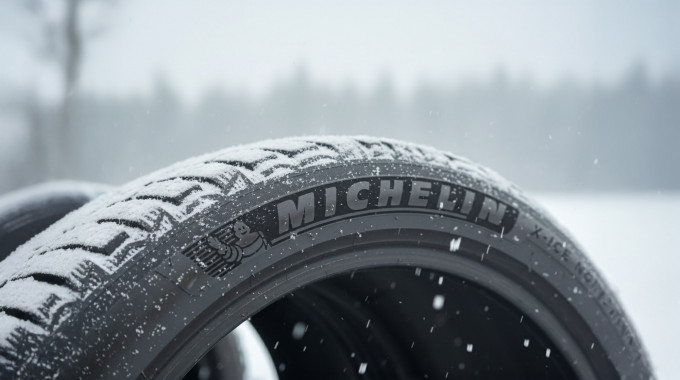
Michelin X-Ice Snow Tire Review – Studless Winter Performance for Canadian Winters
When winter hits hard with deep snow, glare ice, and freezing rain, having the right snow tires can make all the difference. The Michelin X-Ice Snow is a premium studless winter tire designed to tackle harsh winter conditions with confidence. This review covers how it stacks up against competitors like Bridgestone Blizzak, its technical features (tread depth, pressure, sizes, warranty), and what winter drivers can expect in terms of winter performance, longevity, and overall value.
TL;DR
The Michelin X-Ice Snow is a top-rated winter tire that delivers excellent traction on ice and snow while offering a quiet, smooth ride and long tread life. It’s a studless design optimized for Canadian winters, using advanced rubber compounds and siping to grip in packed snow, deep snow, and icy conditions. Compared to rivals (e.g. Bridgestone Blizzak WS90), the X-Ice Snow focuses on balanced performance – slightly less aggressive on pure ice than a studded tire, but superior in ride comfort, noise, and fuel efficiency. Backed by the Michelin Promise Plan (including a 6-year/40,000-mile treadwear warranty), most drivers can expect 4-6 winter seasons of use under normal driving. In short, it’s one of the best winter tires for those seeking reliable snow performance and ice grip without the downsides of studs.
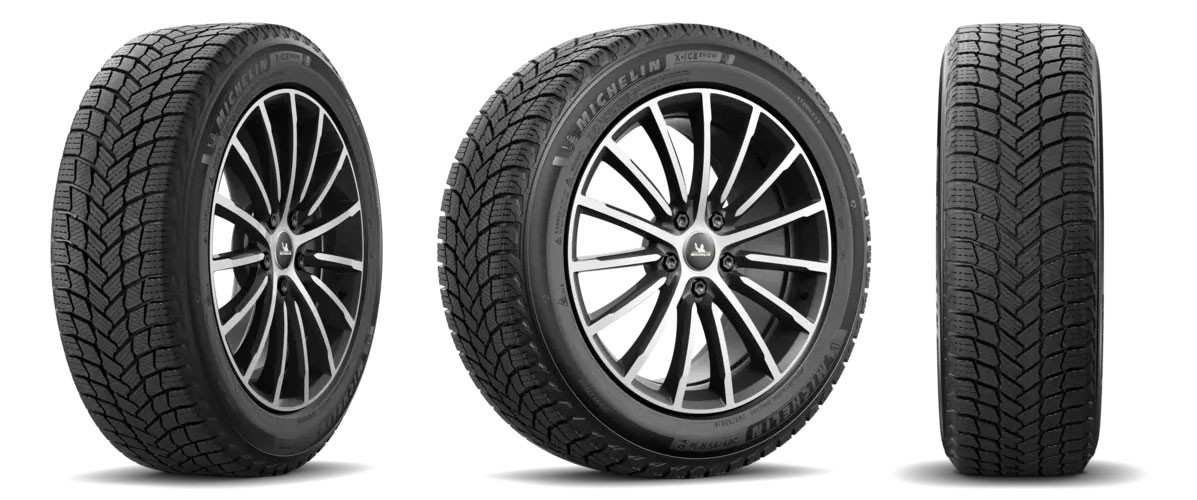
Michelin X-Ice Snow Tire
Key Takeaways
- Excellent Snow & Ice Traction: The Michelin X-Ice Snow uses a FleX-Ice 2.0 compound with full-depth 3D sipes, giving it strong grip on snow and ice throughout the tire’s life. It maintains traction in fresh snow, packed snow, and on ice, providing shorter stopping distances in winter conditions (Michelin claims ~8% better ice grip than its predecessor).
- Studless Design vs Studded Tires: As a studless winter tire, the X-Ice Snow relies on its rubber compound and tread features for traction. It runs quieter and with lower rolling resistance than studded options, making for a more comfortable drive on dry or wet pavement. While a studded tire (e.g. Michelin X-Ice North 4) can outperform it on sheer glare ice, the X-Ice Snow excels in slushy and mixed conditions and avoids the legal restrictions of studs in some provinces.
- All-Round Winter Performance: In independent ratings, the X-Ice Snow is considered a strong all-rounder – delivering balanced performance in snow, ice, wet, and dry cold roads. It offers a smooth ride with lower noise levels than many competitors. Its winter focus does mean slightly longer dry braking than a performance winter tire, but it remains predictable and stable for everyday winter driving.
- Longevity & Warranty: A major highlight is longevity – Michelin designed this tire to last “up to one additional winter” longer than leading competitors. It comes with a rare treadwear warranty for a winter tire (6 years or 40,000 miles). Most drivers using them only in winter can get roughly 4–6 seasons of use before the tread wears to the replacement point, especially with proper rotation and care.
- Competitive Comparison: Against the Bridgestone Blizzak WS90, the X-Ice Snow tends to offer slightly better ride comfort, lower noise, and longer tread life, whereas the Blizzak may have a minor edge in absolute snow/ice bite when new. Versus Michelin’s own Pilot Alpin 5 (a performance winter tire), the X-Ice Snow sacrifices some high-speed dry handling in favor of maximum ice grip and deep snow traction. This makes X-Ice Snow ideal for typical commuters and family vehicles (e.g. sedans, crossovers, minivans), including vehicles like the Subaru Outback or VW Golf Alltrack, where winter safety is the priority.
Now, let’s dive into the details of the Michelin X-Ice Snow and how it performs in key areas:
Michelin X-Ice Snow vs. Bridgestone Blizzak WS90
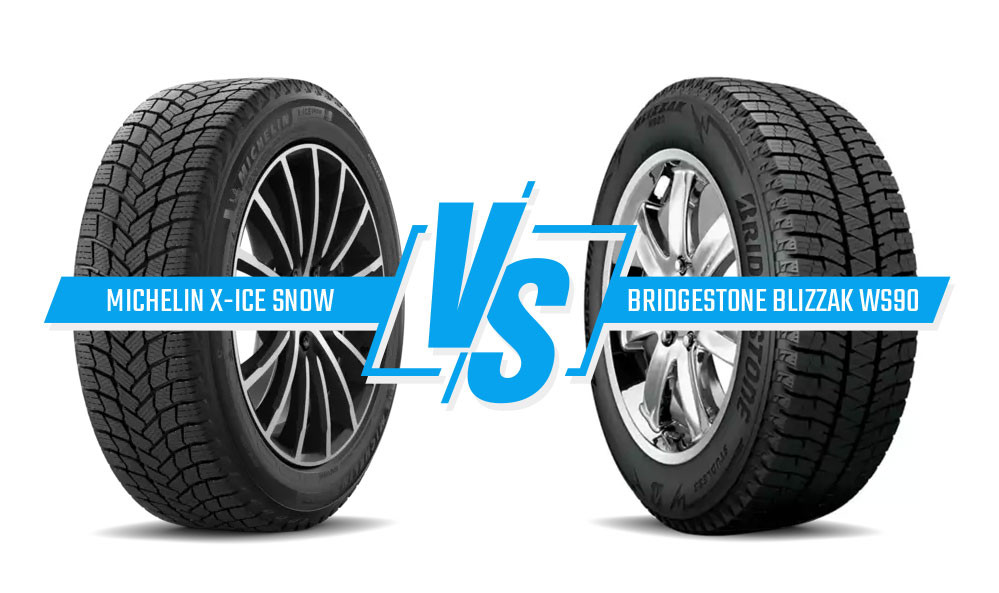
Michelin’s X-Ice series and Bridgestone’s Blizzak line are perennial rivals in the studless winter tires category. The X-Ice Snow and Blizzak WS90 are both highly regarded for winter traction, but they have some nuanced differences:
- Traction & Winter Grip: Both tires deliver excellent snow and ice performance. Tests indicate they’re closely matched in snow traction and ice braking. The Blizzak is known for its special Multicell compound that creates microscopic pores for ice grip, often giving it a slight edge on sheer ice in early tread life. However, Michelin’s X-Ice Snow uses micro-roughness technology and high-silica rubber to also grip ice effectively, and maintains that grip as it wears (thanks to full-depth biting sipes). In deep heavy snow, Blizzak’s deeper grooves can claw through confidently, but X-Ice Snow is not far behind and even outperforms in some slush and wet-snow scenarios due to its V-shaped tread that evacuates slush efficiently.
- Ice vs Wet Trade-off: On pure ice, Blizzak tires (like the WS90) are often benchmark performers, but one trade-off noted is their wet-road handling once that top compound layer wears down. The X-Ice Snow, by contrast, places a bit more emphasis on wet braking and hydroplaning resistance. This means on wet roads or melting conditions, Michelin may hold an advantage in stability and stopping distances. In other words, Blizzak leans slightly more toward maximum snow/ice grip, while X-Ice Snow aims for more balanced winter handling.
- Ride Comfort and Noise: Michelin’s tire is generally praised for a quiet, comfortable ride for a winter tire. Its tread is optimized to minimize the high-pitched “whir” or drone on clear asphalt that some aggressive winter tires exhibit. Blizzak WS90, with its aggressive block edges, can be a bit noisier and have a firmer steering feel. If you prioritize a smooth ride and low noise levels in winter, the X-Ice Snow has an edge here.
- Tread Life: One of the biggest differences is longevity. Bridgestone Blizzak WS90 does not come with a mileage warranty – and it’s known that the Blizzak’s special compound only extends through a portion of the tread (after ~55% wear, it reverts to a harder base compound). In practice, many Blizzak users get about 3 winters of strong performance before replacement. Michelin specifically engineered the X-Ice Snow for long wear – it boasts a 40,000-mile (60,000 km) treadwear warranty, unusual for winter tires. Michelin’s EverGrip technology and MaxTouch construction help the X-Ice Snow resist wear, giving it a longer service life. In short, if you want a tire that will last through many seasons, the X-Ice Snow has the advantage (Michelin touts it may last one winter longer than rival tires).
- Fuel Efficiency: The X-Ice Snow’s “GreenX” low-rolling-resistance design means it’s a bit easier on fuel. Its rolling resistance is about 9% lower than the previous generation, helping with fuel economy. Comparatively, Blizzak tires often have slightly higher rolling resistance (that stickiness that helps traction can also slightly hinder fuel efficiency). While differences in real MPG may be small, it’s a consideration for eco-conscious drivers or EV owners – and indeed Michelin markets X-Ice Snow for use on electric vehicles as well.
Bottom Line: Both the Bridgestone Blizzak WS90 and Michelin X-Ice Snow are excellent winter tires and safe choices for winter drivers. The Blizzak might give you a touch more bite on pure ice when new, whereas the Michelin offers a quieter ride, potentially longer tread life, and a better warranty. For drivers who want durability and a more refined on-road experience, the X-Ice Snow shines; for those who drive often on unplowed roads or demand every last ounce of ice traction (and don’t mind a bit more noise or quicker wear), the Blizzak is still a strong contender. Notably, Canadian Tire’s independent testing gave the Michelin X-Ice Snow nearly perfect scores (100% for snow/ice traction and 98% for fuel efficiency), indicating its well-rounded performance. Meanwhile, the Blizzak line remains popular and proven, but you’ll likely be replacing them sooner.
Michelin X-Ice Snow vs. Michelin Pilot Alpin 5
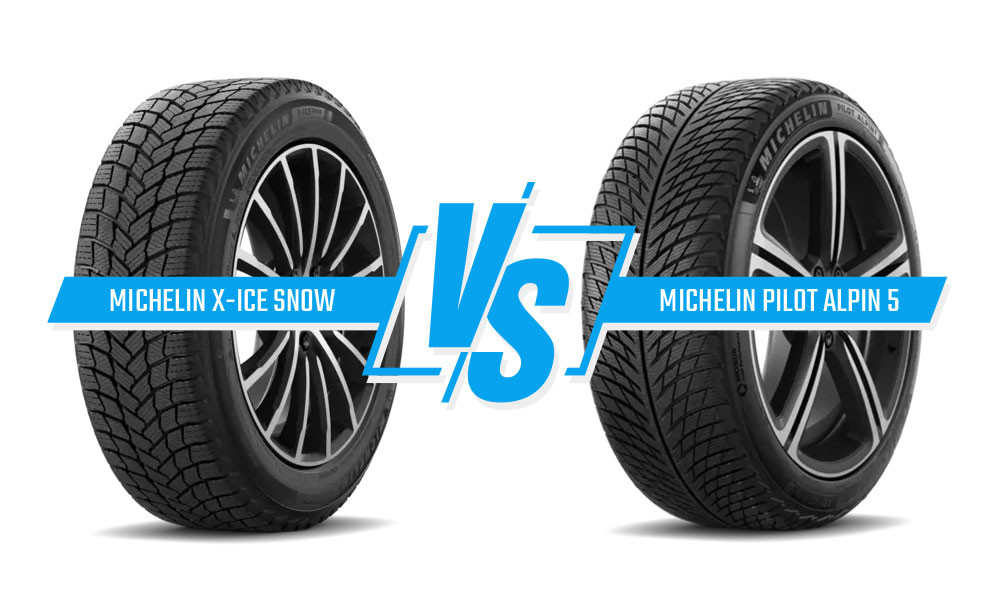
Michelin offers several winter tire models, and the Pilot Alpin 5 is another well-known one. However, the Pilot Alpin 5 and X-Ice Snow are designed with different drivers in mind:
- Performance Category: The Pilot Alpin 5 is a performance winter tire (often used on sports cars, performance sedans, or luxury vehicles). It’s engineered for higher speed stability, precise handling, and strong wet/dry performance in cold weather. The X-Ice Snow, on the other hand, is a studless ice & snow tire aimed at maximum safety on ice and snow for mainstream vehicles (compact cars, family sedans, crossovers, etc.). This fundamental difference means the Pilot Alpin is tuned more like a winter tire you can enjoy driving enthusiastically, while the X-Ice Snow is tuned for confidence and security in severe conditions.
- Snow and Ice Traction: In terms of sheer snow/ice grip, the X-Ice Snow holds the advantage. It has a more aggressive tread for biting into snow performance and a softer compound that remains flexible in extreme cold. The Pilot Alpin 5 still carries the three-peak mountain snowflake rating and is competent in winter, but its tread pattern is more about maintaining stability at higher speeds (with a directional design to resist hydroplaning) and less about digging into deep snow. Drivers and tests often report that in heavy snow or on glare ice, the X-Ice Snow “dominates” the Pilot Alpin in traction. Simply put, Pilot Alpin tires can struggle slightly more in deep Canadian snow compared to the X-Ice Snow, which was built for those exact conditions.
- Dry and Wet Handling: Where the Pilot Alpin 5 shines is on cleared roads. Its rubber compound is a bit harder and its tread blocks more solid, which translates to better steering response, cornering grip, and shorter braking on cold wet pavement or dry cold roads (relative to a pure ice-focused tire). If you frequently drive at highway speeds on dry cold days or live in a city where roads are often plowed and just wet, the Pilot Alpin can feel more stable and sporty. One forum comment from a Tesla owner summarized that the Pilot Alpin is “better in wet and dry conditions” but the X-Ice Snow has superior traction when it comes to actual snow and ice.
- Ride and Noise: The Pilot Alpin is designed for performance, which often means a firmer ride and possibly slightly more road noise compared to a softer compound tire. The X-Ice Snow, while also not as hushed as a summer tire, is often noted to be relatively quiet for a winter tire. If comfort is a priority, X-Ice Snow might be preferable; if crisp handling is the goal, Pilot Alpin is in its element.
- Tread Life: Both tires can last several winters, but because Pilot Alpin tires typically start with a bit shallower tread depth and are often driven by enthusiasts, their lifespan might be a tad shorter under aggressive use. The X-Ice Snow’s tread is designed to be deeper (around 8 mm new, ~10/32") and more wear-resistant for long life. Moreover, Michelin doesn’t provide a mileage warranty on Pilot Alpin models (common for performance winters), whereas the X-Ice Snow has that 40,000-mile warranty. So if longevity is your aim, X-Ice Snow again has the edge.
Which to Choose? It comes down to your vehicle and driving style. If you drive a BMW M3, Audi S4, Mercedes-AMG, or any car where you value sharper handling and you mostly encounter plowed roads with occasional light snow, the Pilot Alpin 5 will give you confidence without sacrificing too much performance. It’s the tire for someone who says, “I need winter tires, but I still want my car to feel sporty in winter.” On the other hand, if you drive a typical passenger car or SUV and face regular snowstorms, unplowed streets, or icy driveways, the X-Ice Snow is likely the better choice for sheer winter grip and worry-free driving. Many drivers of family cars or even AWD crossovers (think Toyota RAV4, Honda CR-V, Subaru Outback, VW Golf Alltrack, etc.) opt for X-Ice tires because they prioritize traction and safety over spirited driving in winter. In summary: Pilot Alpin 5 = winter performance for enthusiasts; X-Ice Snow = winter safety and traction for everyone.
Michelin X-Ice Snow vs. Studded Tires
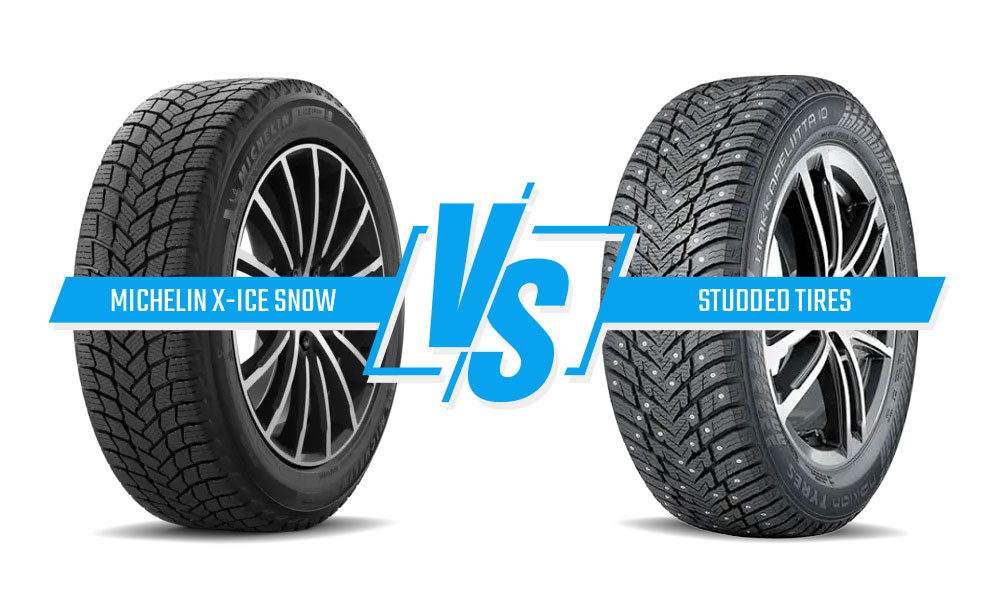
How does the X-Ice Snow compare to a studded winter tire? This is a common question, especially for those in extreme climates. Studded tires (like Michelin’s own X-Ice North 4, or Nokian Hakkapeliittas) have metal studs that dig into ice. The X-Ice Snow, being studless, uses its rubber compound and tread design for traction. Here’s a breakdown of the differences and when each makes sense:
- Ice Traction: On sheer ice (think freezing rain coating the road, or hard-packed snow that’s turned to ice), studded tires usually have the advantage. The tiny tungsten-carbide studs act like claws to grip the ice. A tire like the Michelin X-Ice North 4 (studded) often outperforms any studless tire in these conditions. The X-Ice Snow does an admirable job on ice for a studless tire – its Flex-Ice compound and sipes maximize friction – but it can’t physically bite into ice the way metal studs can. If you live in an area with frequent glare ice or freezing rain where roads remain icy for long periods, studded tires might be the safer bet.
- Snow Traction: In soft or deep snow, both studded and studless winter tires perform well by dint of their tread patterns. The X-Ice Snow has a directional V-shaped tread with deep grooves that evacuate snow and slush, providing excellent traction in deep powder and through slushy roads. A studded tire like the X-Ice North 4 also has an aggressive tread (often also directional with lots of siping). In many tests, studded vs studless tires are roughly on par in deep snow traction – the rubber compound and tread design matter more here than the presence of studs. The X-Ice Snow, for instance, has proven very capable in Canadian blizzards and can plow through heavy snow confidently. Studs don’t add a huge benefit in fluffy snow, since snow compressibility, tread depth, and vehicle ground clearance are bigger factors.
- Mixed Wet Conditions: One downside of studs is performance on wet or cleared roads. Studded tires tend to have longer braking distances on wet asphalt and can feel less sure-footed in rain because the metal studs reduce the rubber that contacts the road and can skid on smooth wet surfaces. The X-Ice Snow, without studs, has more of its rubber in contact and is designed with channeled grooves to resist hydroplaning. So if you’re driving on a mix of cleared highways, rainy winter days, and only occasional ice, a studless tire like X-Ice Snow may actually be safer and more predictable.
- Noise & Comfort: Studded tires are loud. The metal pins clicking on pavement create a constant noise, often a hum or clicking that increases with speed. Michelin has tried to optimize stud placement on the North 4 to reduce noise, but physics is physics – you’ll hear them. The X-Ice Snow is much quieter, sounding like a normal winter tire (which itself is a bit noisier than an all-season, but far more civil than studs). If you do a lot of highway driving, the noise from studs can be fatiguing. The studless X-Ice Snow offers a quieter, smoother ride in comparison. It also doesn’t have the slight vibration that sometimes comes with studs.
- Rolling Resistance & Fuel Economy: Studded tires usually have higher rolling resistance. The protruding studs and often heavier tread can increase drag. The X-Ice Snow, as noted, focuses on lower rolling resistance for better mileage. So you might save a bit on gas (or extend your EV range a bit more) with studless tires.
- Wear and Tear: Studded tires can cause more wear on the tire itself (studs can work loose over time, leaving holes), and they can also wear out road surfaces (hence why they’re regulated). The X-Ice Snow doesn’t have these issues – no studs to fall out or cause uneven wear. Also, if you accidentally run a studded tire a bit into spring on dry roads, you can greatly accelerate its wear and even fling out studs. Studless winter tires are a bit more forgiving if a late cold snap keeps them on a couple weeks longer; they’ll just behave like a snow tire on dry roads (soft, but no metal scratching the pavement).
- Legality and Usage Window: In many parts of Canada, studded tires are only legal during certain months or not at all. For example, Ontario bans studded tires (except for far northern regions), and Quebec allows studs only from mid-October to May. British Columbia allows them during winter months (Oct 1 – April 30) on certain routes. If you travel between provinces, this could be an issue. So studless tires like the X-Ice Snow can be used anywhere without worry. They’re the default choice for city drivers or inter-province drivers for whom studs aren’t an option due to laws.
Which is Better for You? If you live in an area with extreme winter conditions – lots of days of black ice, rural unpaved roads that freeze over, minimal road maintenance – then a studded tire might provide that extra margin of safety. Think of far northern areas, or mountain regions where ice can be persistent. Michelin’s X-Ice North 4, Nokian Hakkapeliitta 10, or other studded models could be worth the slight inconveniences for the sheer grip on icy surfaces.
For most drivers, especially in urban or suburban areas that get regular snow but also see plowed roads, the studless X-Ice Snow is more than sufficient (and often preferable). It delivers confidence on snow and ice that’s very close to studded performance, without the drawbacks. It’s also less of a hassle – you can install them early in the season and not worry about tearing up the driveway or needing to swap them off by a hard deadline.
Additionally, modern studless tires have closed much of the gap in ice performance thanks to innovations in rubber compounds. The X-Ice Snow, for instance, ranked near the top in many ice braking and handling tests for studless tires, only clearly beaten by the best studded models. Unless you routinely drive on sheer ice, you likely won’t feel lacking with a tire like this.
Finally, consider that studded tires should be broken in (driven ~300-500 km at moderate speeds to set the studs) and require care (you don’t rotate them front-to-back because it reverses their direction of rotation unless they’re re-studded). With X-Ice Snow, you just mount and go, rotate normally.
So, X-Ice Snow vs studded: For 90% of drivers, the studless X-Ice Snow is the recommended choice for its well-rounded performance in winter conditions (and no legal hassles). For the 10% who drive in truly treacherous icy environments, studded tires are the specialist that might be worth it. Michelin conveniently makes top-tier options for both scenarios – and in fact, their own comparisons indicate North 4 (studded) “often shows better ice traction” while X-Ice Snow “retains advantages in wet braking and rolling efficiency”. It really comes down to your typical winter driving scenario.
(For a more detailed discussion on studded vs non-studded, check out our explainer “What Are Studded Winter Tires & Are They Legal in Canada?” for the legalities and pros/cons in different provinces.)
Michelin X-Ice Snow Tire Tread Depth
Tread depth is critical for winter traction – deeper grooves help channel snow and slush, and allow the tire’s biting edges to work. The Michelin X-Ice Snow comes with an average new tread depth of about 8 mm (approximately 10/32"). This is in line with many dedicated winter tires (which often range from 10/32" to 12/32" when new, depending on tire size and model). Some sources note slight variations by size – e.g., certain dimensions might have up to ~10.5/32" – but roughly 8 mm is the standard.
More important than the exact new depth is how the X-Ice Snow’s tread is designed to maintain performance as it wears. Michelin uses full-depth sipes and “EverGrip” technology so that even as the tire wears down, new micro-biting edges continue to be effective. In fact, Michelin tested the X-Ice Snow in worn conditions (at 4 mm remaining, which is about half-worn) and found it still outperformed many competitors in snow and ice braking. This indicates that the tread pattern and compound are engineered to be effective not just when new, but through the tire’s usable life.
For drivers, it’s recommended to monitor your winter tires and consider replacing them once they get down to around 4 mm tread depth (even though legal tread limits are lower). At ~4/32" (3.2 mm), snow traction and especially ice traction drop off significantly. So, while the X-Ice Snow might start at ~10/32", you’d use about 6/32" of that before you should replace it for optimal winter performance. In practical terms, given the long wear of these tires, that could be after 5+ winters of driving (depending on mileage per season).
In summary, Michelin X-Ice Snow tread depth is generous and built for longevity. It starts deep enough to handle heavy snow, and its tread features continue working effectively down to the last couple millimeters. Just remember to check tread depth each fall – a simple gauge or the classic “quarter test” can help you see if you’ve got enough groove left for safe snow driving. If it’s nearing that 4 mm range, it’s time to plan for new tires (better safe than sorry when winter grip is on the line).
Michelin X-Ice Snow Tire Pressure
Maintaining proper tire pressure in winter is vital for performance and safety. Michelin does not specify a one-size-fits-all pressure for the X-Ice Snow (or any of its tires) – instead, you should follow your vehicle manufacturer’s recommended tire pressure for winter tires, the same as you would for any tire on that vehicle. This info is usually found on the driver’s door jamb sticker and in the owner’s manual. For most passenger cars and SUVs, it ranges somewhere between 32 and 36 PSI, but always go by your specific car’s specification.
A few tips regarding tire pressure and the X-Ice Snow (or any winter tire):
- Check Pressure in Cold: Tire pressure drops as the temperature drops (roughly 1–2 PSI for every 5°C drop). In frigid weather, your tires could be underinflated if you set them in the fall and never checked again. It’s wise to check pressures on cold mornings and top them up to the recommended PSI. The X-Ice Snow, being a winter-focused tire, is designed to operate in cold temperatures, but it still relies on correct inflation to maximize its contact patch on ice and snow.
- Avoid Over-Inflation: Some might think of over-inflating to reduce rolling resistance or increase responsiveness, but in winter this can be counterproductive. An over-inflated tire has a smaller contact area, which can degrade snow and ice traction (you want the tire to flatten out a bit and grip). It can also make the ride harsher and the tire more prone to damage from potholes (a common winter hazard). Stick to the recommended pressure; do not exceed it for “performance” reasons in winter conditions.
- Avoid Under-Inflation: Conversely, under-inflated tires will feel mushy and can overheat (even in cold weather) due to increased flex. This can harm the tire’s structure over time. Under-inflation also hurts dry braking and wet handling on those occasional warmer winter days or rainstorms. Plus, low pressure can cause uneven wear. If your car has TPMS (tire pressure monitoring system), pay attention if that light comes on during a cold snap – it may be telling you one or more tires fell below the threshold.
- No Special “Winter PSI” Needed: In the past, some people thought to add a couple PSI in winter to compensate for temperature drop. The best practice today is simply to set the tires at the correct pressure while cold. If you fill your tires in a warm garage, remember the pressure will drop once the car is out in -20°C weather. So you may inflate a couple PSI higher indoors so that when the tires cool to outside temps, they’re at target. The key is to routinely check them. The X-Ice Snow will perform at its best (traction and treadwear-wise) when kept at proper PSI.
Michelin’s guidance aligns with general recommendations: use the vehicle’s spec, check pressure regularly (especially as seasons change), and adjust as needed. Proper inflation also helps with the tire’s rolling resistance – one of the selling points of the X-Ice Snow is better fuel efficiency, which assumes the tires are correctly inflated. Running them at, say, 5 PSI too low could negate some of that efficiency and increase tire wear.
Bottom line: Treat the Michelin X-Ice Snow like any performance tire when it comes to inflation – keep it at the manufacturer’s recommended cold tire pressure. For example, if your Honda CR-V door sticker says 33 PSI front/rear, inflate the X-Ice Snow to 33 PSI on cold mornings. Doing so will ensure you get the best winter performance (maximizing that all-important ice grip and stability) and the longest life out of your tires. And don’t forget, cold air contracts – check your pressures whenever a deep freeze rolls in!
Michelin X-Ice Snow Tire Sizes
One of the strengths of the X-Ice Snow lineup is the breadth of sizes available. Michelin has made this tire in a wide range to fit everything from small compact cars to crossovers, SUVs, and even specific fitments for trucks and electric vehicles. By the end of 2021, Michelin had launched 123 sizes of X-Ice Snow (including SUV variants). This means whether you drive a little Honda Civic or a large Audi Q7, there’s likely an X-Ice Snow that fits your wheels.
Available Rim Diameters: Sizes range roughly from 14-inch wheels up to 22-inch wheels in the X-Ice Snow family. For example, common sizes include 205/55R16 (for compact cars), 215/65R16 or 225/60R17 (for small SUVs and sedans), 225/50R17, 225/45R18 (for sport compacts and wagons – a popular size for vehicles like a VW Golf or Subaru WRX), up through 245/50R20 or 275/45R20 for larger SUVs. Michelin also offers a dedicated X-Ice Snow SUV line for heavier crossovers and SUVs, which often have higher load ratings.
Load Index and Speed Ratings: Despite being a winter tire, many X-Ice Snow sizes carry respectable speed ratings (H or T, meaning up to 210–240 km/h) to accommodate highway use – always check what your size’s rating is. They are not performance tires, so you won’t see very high speed ratings like V or W commonly (except maybe in some performance car sizes), but they meet or exceed the typical winter driving needs. Load indexes cover passenger car needs and also the higher loads for SUVs. For instance, a popular crossover size might be 235/60R18 107H XL – which X-Ice Snow likely offers.
Metric and Flotation Sizes: Most are metric sizes (P-metric or Euro metric). If you have a pickup or something needing a flotation size (like LT-metric), Michelin’s primary winter offering for light trucks is actually the Latitude X-Ice or other models, so X-Ice Snow is mostly for passenger and crossover categories. But some LT sizes might exist or alternatively those vehicles can use the XL-rated SUV sizes if appropriate.
Electric Vehicle Fitments: Michelin has also marketed the X-Ice Snow for EVs (electric cars) since EVs need winter tires too and often require low rolling resistance. The broad size range includes many EV OEM tire sizes (for example, Tesla Model 3 or Model Y sizes). If you have an EV, the X-Ice Snow is a common recommendation due to its balance of winter grip and efficiency.
When shopping, it’s crucial to get the exact size recommended for your vehicle (or an accepted minus sizing for winter). The X-Ice Snow’s huge size availability means most drivers can stick to their stock wheel size. If you’re downsizing wheels for winter (common to go from say 19” summer wheels to 17” winter wheels for a taller sidewall), you’ll likely find an X-Ice Snow in that smaller size too.
One thing to note: always confirm local availability. While Michelin catalogs 100+ sizes, not every retailer will stock all sizes, especially unusual ones. If you drive something with a rare tire size, you might need to order ahead of time.
Also, be aware of any provincial restrictions if you consider studded versions – however, the X-Ice Snow itself is studless (the studdable Michelin model is the X-Ice North series). So the X-Ice Snow is legal everywhere by default. Studded tires, on the other hand, are allowed only in certain areas or months (e.g., permitted in winter in provinces like BC (interior regions), Alberta, etc., but not allowed in Southern Ontario at all). Because the X-Ice Snow doesn’t use studs, it’s an ideal option (and sometimes the only option) for drivers in places where studs are prohibited or for those who prefer not to deal with studded tire drawbacks.
In summary, Michelin X-Ice Snow tire sizes are plentiful: virtually any common vehicle can be equipped. Whether you have a tiny city hatchback on 15’s or a large family SUV on 20’s, there’s an X-Ice Snow for you. This wide size selection is great for households with multiple vehicles as well – you might outfit both your sedan and your partner’s minivan with the same model tire, simplifying your tire choices. Always consult with your tire dealer or Michelin’s official resources to pick the right size and load rating for your specific car, but rest assured, the X-Ice Snow likely has you covered.
(Internal note: Canada Drives readers shopping for winter tires can check out our Best Winter Tires in Canada for 2025 guide to see how the X-Ice Snow ranks among other top picks.)
Michelin X-Ice Snow Tire Warranty
Michelin has a strong reputation for standing behind its tires, and the X-Ice Snow is no exception. While many winter tires come with only basic manufacturer defect warranties (and no mileage guarantee), Michelin offers a comprehensive package known as the Michelin Promise Plan on this tire. Here’s what that includes for X-Ice Snow buyers:
- 60-Day Satisfaction Guarantee: After purchasing, you have 60 days to test the tires. If you’re unhappy with them for any reason, you can return or exchange them. This gives peace of mind – if the tires don’t meet your expectations (maybe you find them too noisy or something, though that’s unlikely with these), you have an out.
- Roadside Assistance: Michelin provides complimentary roadside assistance for the life of the tire’s original tread. This typically covers things like flat tire change service – useful in case you get a flat on a snowy road, you could call and have help. (Always check the details; usually it’s valid for a certain number of years, like 3 years of roadside with tire purchase.)
- Workmanship & Materials Warranty: This is the standard defect warranty. Michelin covers the tire for any defects in manufacturing or materials for the life of the original tread or 6 years from purchase, whichever comes first. In practical terms, if the tire has a flaw (like tread separation or out-of-round) that isn’t due to misuse, they will replace or credit you for it within that time frame. Six years is standard, and since you should not use winter tires beyond 5-6 years old anyway (rubber ages), this essentially covers the usable life span against defects.
- Treadwear Warranty: Unusual for winter tires, Michelin gives a treadwear (mileage) warranty of 40,000 miles (60,000 km) on the X-Ice Snow. This means if your tires wear out (down to the treadwear indicators) before hitting that mileage, and it’s within 6 years, you might be eligible for a prorated credit. Do note there are conditions: you typically have to be the original owner, prove rotations were done, keep them only on during winter months, etc. Also, if your car has a staggered setup (different front/rear sizes that can’t be rotated), Michelin usually halves the mileage warranty. For example, Tire Rack notes “Half mileage for rear if different size than front”. But for most, 40,000 miles of winter use is a lot – you’d have to drive an extraordinary amount each winter to hit that in 6 years (that’s ~65,000 km, more than many people drive in total per year). Regardless, the warranty shows Michelin’s confidence in the X-Ice Snow’s long treadlife.
It’s worth comparing this to Bridgestone’s policy: Blizzak winter tires have no treadwear warranty and just a 5-year defect warranty. So Michelin is indeed offering more coverage.
However, remember what’s not covered by warranties: regular wear (bald tires won’t be warranted if they reached end of life due to normal use outside the mileage warranty), damage from road hazards (potholes, nails – unless you bought separate road hazard protection), improper use, etc. If you run the tire in summer and it wears out super fast, that’s on you – winter tires are meant for winter use only (Michelin’s fine print likely requires that the treadwear warranty only applies if used during winter months, typically defined as September–April).
Michelin’s documentation also emphasizes that while defects are covered, things like irregular wear or mechanical damage (e.g., if you had studs in a different model, or in general any abnormal issue) aren’t covered. For the X-Ice Snow, you don’t have studs to worry about, but still rotate them and keep alignment in check to avoid uneven wear which wouldn’t be warrantable.
Anecdotally, though, the X-Ice line has been praised for quality – over 90% of users say they would buy Michelin X-Ice tires again, a testament in part to their durability and performance.
Also, Michelin tires tend to come at a premium price, and part of what you’re paying for is this robust warranty and support. The presence of a mileage warranty and roadside assistance can justify spending a little extra versus a budget winter tire that offers no such protections. As one Canada Drives article suggests, always ensure your winter tires come with at least a 5-year warranty for peace of mind – and Michelin meets that criteria easily with 6 years coverage.
In summary, the Michelin Promise Plan on X-Ice Snow gives you: a satisfaction trial, help if you get stranded with a flat, and long-term coverage against defects or premature wear. It’s one of the best warranty packages in the winter tire market. This should reassure buyers that not only are they getting a top-performing tire, but they’re also covered in case anything goes wrong during those cold, dark months on the road.
(Internal link: For more winter tire buying tips – like understanding warranties and what to look for – see our post on Buying Tips for Your Winter Tires.)
How Long Do Michelin X-Ice Snow Tires Last?
When investing in premium winter tires, it’s natural to ask how many seasons you’ll get out of them. Michelin X-Ice Snow tires are known for their durability and long wear – in fact, longevity is one of their selling points. Here’s what to expect and how to maximize their life:
- Expected Lifespan in Seasons: Most drivers can get 4 to 6 winter seasons from a new set of X-Ice Snows. This assumes you use them only during winter months (~4-5 months a year) and store them properly in the off-season. Four seasons would be on the lower end (perhaps if you drive a lot of kilometers each winter, or have a heavier vehicle), and six or even more seasons are possible for lower-mileage drivers. Michelin’s internal tests indicate the X-Ice Snow can last one additional winter compared to other top-tier winter tires, thanks to its wear-resistant compound.
- Treadwear Warranty Mileages: The tire carries a 40,000-mile warranty. If we translate that: 40k miles ~ 64k km. If you divide that over, say, 5 winters, that’s about 8,000 miles (13,000 km) per winter season that Michelin expects the tire can handle. So if you drive ~10,000 km each winter, you’d probably be nearing the treadwear limit by the 5th or 6th winter. Many drivers drive less than that in winter, meaning the tires may age out (hit that 6-year mark) before they wear out on tread.
- Factors Affecting Tire Life: Driving habits play a huge role. Aggressive acceleration or hard braking on dry pavement will wear winters faster (they are softer than all-seasons). Running them in warmer temperatures (late spring or summer) will drastically shorten their life – winter compounds wear quickly on hot asphalt. So to maximize life, use them only in the cold season. Also, high-speed highway driving will wear tires faster than around-town use. A heavier vehicle (say a large SUV) or one with torque-y characteristics (like an EV) can also eat tires sooner. On the flip side, a light compact car gently driven could see these tires last well beyond 6 winters in terms of tread (though you’d still consider replacing around year 6-7 due to rubber aging).
- Maintenance: Rotation is key. Rotate the tires every season or every ~8,000 km to ensure even wear. Keep them inflated properly (as discussed earlier, under/over-inflation can cause uneven wear). Check alignment – bad alignment can chop up a winter tire quickly. If you notice any uneven wear (like one edge wearing faster), address it immediately. By taking care of them, you ensure you use all the tread evenly over time.
- Storage: How you store winter tires in the summer affects their longevity. Store them in a cool, dark place, away from direct sunlight or ozone sources (like motors or furnaces). Ideally, bag them to reduce exposure to air. This keeps the rubber from drying out or cracking. A well-stored winter tire will remain pliable for the next season, whereas one left outside in the sun next to a shed might harden and lose performance even if tread remains.
- Wear Indicators: The X-Ice Snow has winter treadwear indicators (often little snowflake symbols or bars) that show when the tire is at the minimum tread depth for snow traction (often around 4 mm). Keep an eye on those. Once worn to that point, you’ll want to replace the tires even if there’s a bit of legal tread left, because winter performance will be greatly reduced. It’s about safety – a tire with 3 mm tread simply can’t bite into snow like it did with 8 mm. If you’re curious, Michelin likely incorporates small triangular marks or the letters “TWI” on the sidewall where the wear bars are. Check those each season-end.
In real customer experiences, many report the X-Ice tires last exceptionally well. It’s not uncommon to hear of 6+ winters of use. For example, a driver might say: “I’ve run these tires for 5 winters (~40,000 km) and they still have a few millimeters above the winter wear bar, with even wear and no issues.” This is a testament to the X-Ice Snow’s design focusing on longevity in addition to traction. It’s a bit of a Michelin hallmark: they try to balance performance with treadlife.
One thing to guard against: don’t run your X-Ice Snows year-round. If you do, they will wear out in maybe 1 to 2 years (summers will chew them up quickly) and you also compromise safety in summer. These are strictly winter tires – once spring consistently brings ~7°C+ weather, swap them off to all-seasons or summers. By only using them in winter, you effectively “pause” their wear in the off-season, preserving them for multiple years.
To sum up, Michelin X-Ice Snow tires can last a long time – potentially 5 or more winters – if you treat them well. Many consider them a worthwhile investment not only for the safety they provide but also because you won’t be needing to buy new winter tires every couple of years. With proper care, they’ll be with you through many snowy commutes. And when they finally do wear out, you’ll likely have traveled tens of thousands of kilometers through snow and ice with confidence. At that point, given their track record, you might be among those 90% of drivers who say they’d buy them again!
(For general tips on making winter tires last as long as possible, see our guide on How Long Do Winter Tires Last & How to Maximize Their Life.)
FAQ
Q: Are Michelin X-Ice Snow tires good for ice and snow?
A: Yes – the X-Ice Snow is specifically engineered for excellent traction on ice and snow. It’s a studless winter tire packed with features for winter grip, like a special Flex-Ice 2.0 compound that stays flexible in extreme cold and full-depth sipes that create biting edges on slick surfaces. In independent tests and user reviews, it consistently rates among the best winter tires for snow and ice performance, often matching or beating competitors. For example, it received a 100% score for snow/ice traction in one Canadian Tire evaluation. Unless you are driving on pure glare ice every day (where only a studded tire might do marginally better), the X-Ice Snow will deliver confident braking, acceleration, and cornering on winter roads.
Q: How do the Michelin X-Ice Snow compare to the older X-Ice Xi3?
A: The X-Ice Snow effectively replaced the X-Ice Xi3 (and the Latitude X-Ice Xi2 for SUVs) as Michelin’s flagship studless winter tire. Compared to the Xi3, the X-Ice Snow has a new tread pattern (continuous V-shape) with increased groove width for better slush evacuation, and uses the updated Flex-Ice 2.0 compound with special microcrystal additives for improved ice grip. Michelin reports that the X-Ice Snow stops about 8% shorter on ice and 4% better on snow than the Xi3 did. It also improved hydroplaning resistance by about 7%. Another difference is the tread is designed to maintain performance when worn – Michelin tested it in worn condition to ensure it still outperforms many rivals. The Xi3 was already a great tire (very popular and highly rated), but the X-Ice Snow builds on that legacy with moderate improvements in all the critical winter areas. In practice, if you liked the Xi3, you’ll likely find the X-Ice Snow as good or better in every way. The only slight trade-off noted was that noise and comfort are on par with the Xi3 (which is to say, not significantly quieter – some testers found the Xi3 a bit noisy on certain pavements, and the X-Ice Snow is similar).
Q: What is the Michelin X-Ice Snow warranty and what does it cover?
A: Michelin offers a very comprehensive warranty on the X-Ice Snow. It comes with a 6-year / 40,000-mile treadwear warranty, which is rare for winter tires. This covers you if the tread wears out before that mileage (prorated credit). It also includes Michelin’s standard 6-year materials and workmanship warranty (if the tire has defects). Additionally, under the Michelin Promise Plan, you get a 60-day satisfaction guarantee (you can return/exchange if unsatisfied) and 3 years of roadside assistance for flat changes, etc.. Keep in mind, the treadwear warranty assumes winter use only (you can’t run them in summer and claim 40k miles). Also, things like road hazard damage (potholes, nails) aren’t covered by Michelin’s standard warranty (though some tire shops offer separate road hazard protection). Still, Michelin’s warranty on the X-Ice Snow is one of the best in category – Bridgestone, for example, does not give a mileage warranty on Blizzaks.
Q: How do X-Ice Snow tires affect fuel economy?
A: The X-Ice Snow is designed with low rolling resistance in mind (Michelin’s GreenX technology). Michelin claims about a 9% reduction in rolling resistance vs the previous model. In real terms, winter tires typically do reduce fuel economy slightly compared to all-seasons, because they are softer and have a chunkier tread. However, the X-Ice Snow is on the efficient end of winter tires. You might notice a small drop in MPG when you install them (simply because of colder weather and winter gas blends too), but it’s about as minimal as it can be for a tire in this class. Many users find the difference negligible. If you’re coming from an older or more aggressive winter tire, the X-Ice Snow could even improve your fuel economy. And if you drive an EV, the lower rolling resistance means a little less range loss in winter due to tires (cold itself will still impact battery range though!). So, expect a slight hit vs summer tires on fuel, but know that the X-Ice Snow is optimized to keep that impact low.
Q: Do Michelin X-Ice Snow tires require studding? Can you get them studded?
A: No – the X-Ice Snow is a studless design and cannot be studded. It does not have holes for studs, and its compound is formulated to work without them. Michelin’s philosophy with the X-Ice Snow was to offer a tire that delivers near-studded performance without metal pins. If you want a Michelin winter tire that has studs, the parallel line is the X-Ice North 4, which comes pre-studded in some markets (or studdable). But that’s a different product. You should never try to manually stud an X-Ice Snow – there’s no provision for it and you’d ruin the tire. The good news is, the vast majority of drivers won’t need studs; the X-Ice Snow’s traction is excellent on its own. Only consider studded tires if you truly drive on icy backroads where studless tires of any kind aren’t cutting it.
Q: How do they perform on dry roads?
A: The X-Ice Snow behaves predictably on dry cold roads, but remember it is a winter-biased tire. That means its tread blocks are more flexible and the compound is softer in order to grip ice. On dry pavement, especially if it’s warmer (say +5°C and up), you’ll notice the car feeling a bit “squishy” or less responsive than on all-season or summer tires. Braking distances on dry asphalt are longer than your summer tires would be – that’s true of all winter tires, including the X-Ice. However, compared to many other winter tires, the X-Ice Snow actually does quite well in dry braking tests – often mid-pack or better. It’s not a performance winter tire, so it won’t corner as flatly as Michelin Pilot Alpins or similar, but it’s safe and stable for normal driving. Just be gentle and give yourself a bit more stopping distance when the roads are dry (and obviously, once it’s consistently dry and spring-like, swap them off to avoid excessive wear). One positive: the X-Ice Snow’s relatively low weight and efficient design means it doesn’t feel as sluggish as some heavy-duty winters. The steering feel is reasonably good for a winter tire. Overall, dry road performance is solid for its category – not sporty, but secure. Think of it this way: it’s a winter tire that prioritizes the 90% scenario (snow/ice/slush), and it handles the 10% (dry roads in winter) decently well without causing instability.
Q: Are they noisy?
A: The Michelin X-Ice Snow is generally regarded as one of the quieter studless winter tires. It’s not totally silent – you’ll always have a bit more hum from a winter tread than a summer tire due to the blocky pattern. But Michelin did refine the design to reduce pattern noise. Many user reviews mention that these tires are quiet and comfortable for winter rubber. In our experience, at highway speeds you might hear a mild whir, but nothing intrusive (and notably less than the drone from some competitors like older generation Blizzaks or some Nordics). If you’re coming from studded tires or a very aggressive snow tire, the X-Ice Snow will be blissfully quiet. If you’re coming from an all-season, you’ll notice a bit more sound, but your radio can easily mask it. Also, as the tire wears, it tends to remain quiet (some cheap tires get louder as they wear, due to uneven wear). The X-Ice Snow’s even wearing nature and siping patterns prevent that. So yes, it’s quiet for a winter tire, and noise should not be a major concern with these.
People Also Ask
Q: Is the Michelin X-Ice Snow worth the money?
A: If you prioritize safety and long-term value in winter driving, then yes, the X-Ice Snow is worth it. It is a premium-priced tire, but you get premium performance and longevity in return. In Canadian winters – with ice, freezing rain, and heavy snow – the X-Ice Snow can potentially prevent accidents with its superior traction. That alone is “worth it” to many drivers. Additionally, because it wears slowly, you won’t need to replace it as often. And it comes with added value like a treadwear warranty and roadside assistance. Cheaper winter tires might save you upfront but could wear out faster or not grip as well on that surprise ice patch. For most, the peace of mind and durability of the Michelin is a good investment.
Q: How do Michelin X-Ice Snow tires handle packed snow?
A: They handle it very well. Packed snow (snow that’s been driven over and compressed) can be almost as slippery as ice. The X-Ice Snow’s combination of micro-biting edges and a high-silica compound helps it grip even on those slick, compacted surfaces. The tire’s tread has two types of full-depth sipes: some to bite into loose snow, and others to maintain stability and contact on harder surfaces. So when you’re driving on a road that’s been plowed but has a hard snow pack, these tires claw at it effectively. You’ll find starting from a stop, stopping, and turning all feel secure. In fact, many drivers comment that their car feels almost “AWD” with X-Ice Snows on, just because of how well it grips – that’s how much of a difference a good winter tire can make on packed snow.
Q: Do X-Ice Snow tires help on wet pavement in winter?
A: Yes, they are designed to handle wet conditions (like rain or slush) in cold temperatures. The tread pattern is directional with wide lateral grooves, which is great for channeling water and slush to resist hydroplaning. The compound also remains pliable in cold rain, whereas all-season rubber might stiffen and lose grip. In tests, the X-Ice Snow often ranks near the top for wet braking among winter tires – it’s one of its strengths. That said, remember that any winter tire has a lot of siping, which can feel a tad squirmy on wet pavement under hard cornering compared to a summer tire. But overall, you can trust the X-Ice Snow to handle wet winter roads confidently, which is important because winter isn’t just snow – sometimes it’s 2°C and raining, which can be very slippery. These tires excel in those conditions relative to other winter tires (and of course are miles better than summer tires in cold wet).
Q: Can I use Michelin X-Ice Snow tires year-round?
A: It’s not recommended. These are winter tires, and while you could physically drive on them in summer, it would compromise performance and wear them out quickly. In warm weather, the rubber will be too soft, leading to squishy handling, much faster tread wear (they could wear 30-60% faster in summer), and potentially overheating of the tire. Also, the braking distances on hot dry roads would be significantly longer than a proper all-season or summer tire. The best practice is to run the X-Ice Snow in winter, and switch to an all-season or summer tire in late spring through early fall. Using them year-round would negate one of their advantages (longevity) because you’d probably destroy the tread in one summer. If you want a one-tire solution for the whole year, look into all-weather tires (which are a compromise for year-round use, with the winter snowflake rating). But for absolute best performance, keep dedicated winters like the X-Ice Snow for winter only.
Q: How do Michelin X-Ice Snow tires compare to Nokian Hakkapeliitta R5?
A: Both are top-tier studless winter tires. Nokian’s Hakkapeliitta R5 is often cited as one of the few that might out-grip the X-Ice on ice, as Nokian really specializes in winter traction. The R5 has a very aggressive siping pattern and “Arctic grip crystals” in the compound (tiny particles to aid ice grip). In independent tests, the Nokian R5 sometimes edges out the Michelin in extreme ice conditions and possibly deep snow, whereas the Michelin X-Ice Snow tends to have slightly better manners on wet and dry roads (and tends to be quieter). The Hakkapeliitta may also wear a bit faster – previous Nokians were known for superb grip but shorter life, though the R5 is reportedly improved. Michelin offers a mileage warranty; Nokian does not. So it’s a bit of a trade-off: Nokian might be the choice if you want maximum ice/snow traction and are okay with potentially less longevity, while Michelin offers 90% of that traction but with better all-around balance and durability. Price-wise they’re both premium. Ultimately, both are excellent for Canadian winters; it might come down to availability and personal preference. (And some might choose Michelin for the warranty and broader dealer network.)
Related Prompts
- “Explain the key features and benefits of the Michelin X-Ice Snow winter tires for someone considering new snow tires.”
- “Compare the Bridgestone Blizzak WS90 and Michelin X-Ice Snow in terms of snow traction, ice braking, and longevity.”
- “I live in a region with harsh winters (deep snow and ice). Recommend a good studless winter tire and justify why it’s suitable.”
- “Provide maintenance tips to maximize the lifespan of winter tires like the Michelin X-Ice Snow.”
- “In a story format, describe how a quality winter tire (e.g., X-Ice Snow) improves a driver’s experience during a Canadian blizzard.”
(These prompts can be used with AI assistants to further explore winter tire advice, comparisons, or creative explanations, leveraging information from the Michelin X-Ice Snow review.)
About Canada Drives
Canada Drives helps Canadians get pre-approved for vehicle financing before they start shopping. Our online application matches drivers with local dealerships that have vehicle options for all credit situations, including bad credit or limited credit.
With one simple pre-approval, you can avoid wasted time at the dealership and shop with confidence knowing exactly what you're approved for.