Oct 23, 2026
How to Sell a Car That's Been Sitting for Months or Years
A car that's been sitting for months or years can still sell, and often for more than you'd expect. Here's what to check, what to fix, what to disclose, and where to sell a stored vehicle in Canada.
TL;DR
You can sell a car that's been sitting, even one that won't start. Before you list it, handle the cheap fixes (a dead battery, low tire pressure, overdue fluids), check for rodent damage and seized brakes, and be upfront about anything you won't repair. If the registration or insurance lapsed, sort out the paperwork before anyone test drives it. Then price it against Canadian Black Book with its real condition in mind, and pick the buyer that fits the car: a private buyer for a clean garage kept car, an enthusiast for a barn find, or a car buying service like Canada Drives if you'd rather skip the listing altogether.
Key Takeaways
- A car that won't start is still sellable. Its value depends on why it won't start and how honestly you describe it.
- A dead battery is the most common problem on a stored vehicle, and a battery replacement is usually one of the cheapest fixes that pays for itself.
- Old fuel, overdue oil, flat spots, rusted rotors, and rodent damage are the big sitting-car issues. Fix the cheap ones and disclose the rest.
- Expired registration or expired insurance means the car can't be driven on public roads, including for test drives, until it's sorted out or covered by a temporary permit.
- Safety inspection rules vary by province. In Ontario, the buyer needs a Safety Standards Certificate to plate the car, but you can still sell it as-is.
- Selling an inherited vehicle or estate car means confirming who has authority to sign before you list it.
In This Article
- What Happens When a Car Sits
- Can I Sell a Car That Won't Start?
- Do I Need to Fix a Dead Battery Before Selling?
- Does Old Fuel Affect a Car's Sale?
- Do a Full Fluid Check Before You List
- How to Check for Rodent Damage Before Listing
- Flat Spots on Tires: Repair or Disclose?
- Seized Brakes and Rusted Rotors
- Selling a Car With Expired Insurance and Registration
- Getting a Safety Inspection on a Stored Vehicle
- How to Price a Car That's Been Sitting
- Where to Sell a Barn Find or Garage-Kept Car
- Selling an Inherited or Estate Vehicle
- FAQ
- People Also Ask
What Happens When a Car Sits
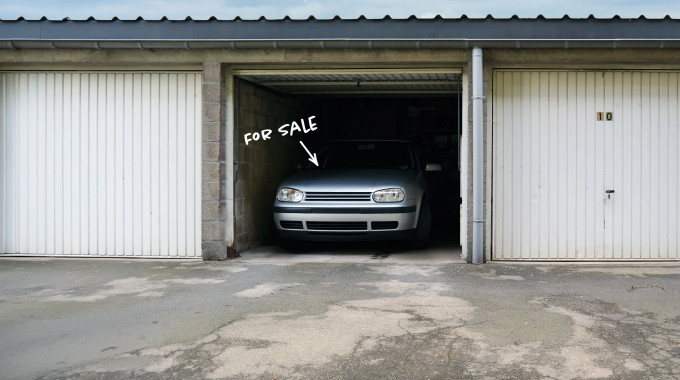
Cars are built to be driven. When a car has been sitting unused, the battery drains, fuel breaks down, seals dry out, tires lose air, and moisture settles on bare metal. A few weeks rarely matters. A car sitting for more than two months starts to show it, and after a few years, almost every system needs a look.
Car owners end up here for all kinds of reasons: a second family car nobody drives anymore, a snowbird return after a winter away, pandemic sitting that turned into a permanent habit, or an estate car that's been parked while the family sorts things out. Whatever the reason, the steps are the same. Find out what still works, decide what's worth fixing, and describe the rest honestly.
Can I Sell a Car That Won't Start?
Yes. Many cars that won't start after storage have a simple problem, usually a flat battery or stale fuel. Others have something more serious, like a failed starter motor or internal engine trouble. Buyers will pay very different amounts depending on which one you have, so it's worth spending a little time on diagnosis before you sell your car.
If you can get it running with a jump start or fresh fuel, you'll reach far more buyers and get a stronger price. If it still won't start, you can sell it as-is, but disclose that clearly and expect offers from buyers who price in the unknown. Our guide to selling a car with a mechanical issue covers disclosure and as-is sales in more detail.
Do I Need to Fix a Dead Battery Before Selling?
You don't have to, but you probably should. A dead battery is the number one reason a stored vehicle won't start, and a car that won't start can't be test driven, inspected properly, or driven onto a buyer's lot. A battery that has sat completely flat for a long period often won't hold a charge again, even after a jump.
A new battery is usually a modest expense compared to the value it protects. If the car starts and runs well with a new battery, you've turned a "won't start" listing into a running car. If it still won't start, you've ruled out the cheapest cause and can tell buyers exactly where things stand.
How to Jump-Start a Car That's Been Sitting
Canada Drives
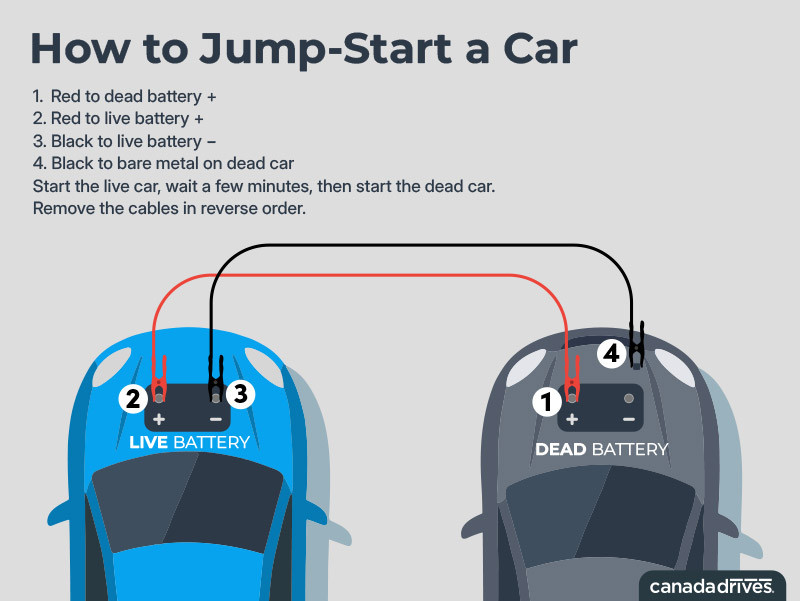
Check your owner's manual first, since some vehicles have dedicated jump points under the hood. Never jump a battery that is cracked, leaking, swollen, or frozen. Then:
- Park the donor car close by, with both vehicles off and parking brakes on.
- Connect one red clamp to the positive terminal on the dead battery.
- Connect the other red clamp to the positive terminal on the donor battery.
- Connect one black clamp to the negative terminal on the donor battery.
- Connect the last black clamp to bare, unpainted metal on the stalled car's engine, away from the battery.
- Start the donor car and let it run for a few minutes, then try starting the stalled car.
- Once it starts, remove the cables in reverse order.
If you hear a single click or nothing at all with a good charge, the starter motor or a corroded connection may be the issue. For a car that's sat for years rather than months, there's a case for not cranking it at all until a mechanic has looked at it. Oil drains off the cylinder walls over time, and starting an engine on old oil and dry seals can risk damaging it. Some engines also make a brief rattle at startup while the timing chain tensioner builds oil pressure. A rattle that doesn't go away needs a professional opinion before you go any further.
Does Old Fuel Affect a Car's Sale?
It can. Gasoline breaks down as it ages. The lighter parts evaporate and what's left can form varnish and gummy residue in the fuel system. Old gasoline can cause hard starts, rough idling, stalling, and a check engine light, all of which show up on a test drive.
The damage depends on the car. On an older car with a carburetor, old fuel can leave a gummed carburetor that needs cleaning or rebuilding. On fuel-injected cars, the risk is clogged injectors, a plugged fuel filter, or an electric fuel pump that sticks after a long period without use.
If the car's sat for more than a few months, the usual fix is to drain the gas tank and refill with fresh gas. While you're there, check the gas cap. A cracked or dried-out seal can trigger an evaporative emissions code and a warning light that makes buyers nervous for no good reason. If you have a rough idea how old the fuel in the fuel tank is, include it in your listing.
Definition: Fuel Stabilizer
A fuel stabilizer is an additive mixed into fresh gasoline before storage to slow the chemical breakdown of the fuel. It helps prevent varnish and gum from forming while a vehicle sits. It won't restore fuel that has already gone stale, so it's a tool for the next storage period, not a fix for this one.
Do a Full Fluid Check Before You List
A full fluid check is one of the cheapest ways to make a stored car feel cared for. Buyers who know cars will pop the hood, and dark oil or a low coolant reservoir tells them the car was simply parked and forgotten. Check all the fluids, and look under the car for fresh drips after it's been running.
- Engine oil: Oil ages even when the car isn't driven, and many owner's manuals list a time interval as well as a distance interval. An oil change overdue by a season or more is common on a stored car, and new oil and a new oil filter are inexpensive and worth doing.
- Coolant: Check the level and colour. If it looks rusty or sludgy, a coolant flush may be needed, or at least worth mentioning.
- Brake fluid: Brake fluid absorbs moisture over time. If it's dark, a flush is a reasonable pre-sale job.
- Power steering fluid: Check the level and look for leaks. Many newer cars use electric power steering with no fluid at all, so check your manual before you go looking for a reservoir.
- Transmission fluid: Check it if your vehicle has a dipstick, and note any burnt smell.
While you have the hood open, look at the air filter, the spark plugs if the engine runs rough, and the serpentine belt. Belts and hoses dry out during storage, and visible cracks are an easy item for a buyer to negotiate on. Topping up the technical fluids and replacing a cracked belt costs little and removes those talking points.
How to Check for Rodent Damage Before Listing
Rodent damage is one of the most common problems with a car sitting in a garage, barn, or driveway, especially through a Canadian winter. Mice and squirrels look for warm, sheltered spots, and an engine bay or air filter box is ideal.
Look for droppings, nesting material, or a musty smell in the engine bay, the air filter housing, the cabin air intake, and under the seats. Check visible wiring harnesses for chewed insulation. If mice chewed wires, you may see warning lights, accessories that don't work, or a car that won't start at all.
Clear out any nests and replace a contaminated air filter or cabin filter. Wiring repairs can range from simple to complex, so get a quote from a mechanic. If you don't fix it, disclose it. Rodent damage that a buyer discovers after the sale is exactly the kind of problem that leads to disputes.
Flat Spots on Tires: Repair or Disclose?
Definition: Flat Spot
A flat spot is a flattened section of a tire's tread caused by the weight of the vehicle resting on the same patch of rubber for a long time. Temporary flat spots often smooth out once the tire warms up during driving. Permanent flat spots cause a vibration that doesn't go away and usually mean the tire needs replacing.
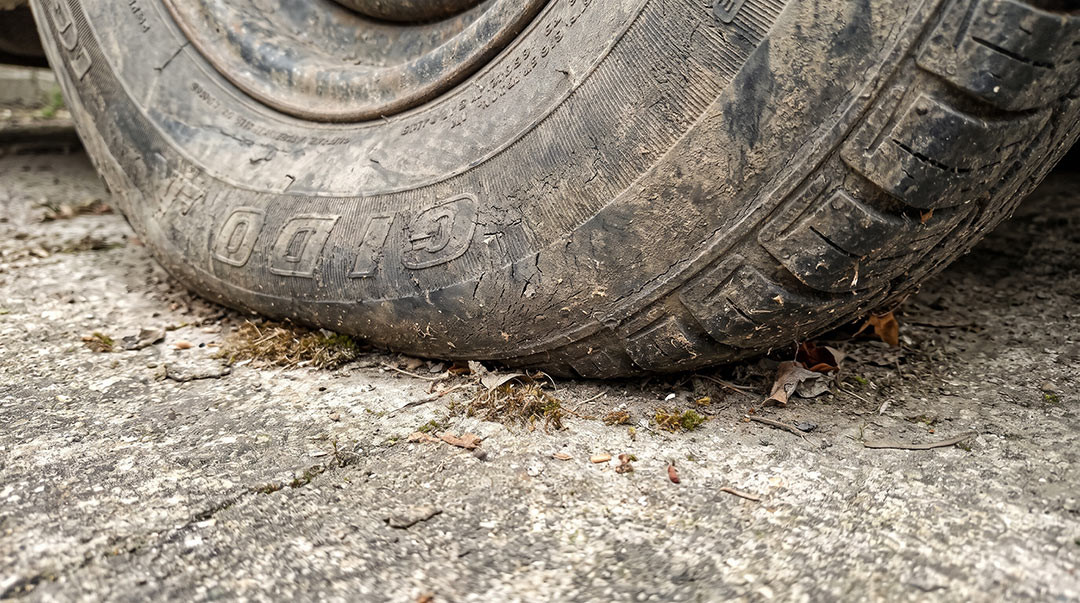
Start by setting the tire pressure to the spec on the driver's door jamb, since tires lose air while they sit. Then take a short drive if the car is roadworthy. If the vibration fades, you're fine. If it doesn't, either replace the affected tires or disclose the flat spot and adjust your price.
Dry rot tires are a different issue. Look for fine cracks in the sidewalls and between the tread blocks. Tires age with time, not just distance, so a set with plenty of tread can still be unsafe. Don't hide dry rot. Disclose it, or replace the tires if the rest of the car is in good condition and new rubber would help it sell.
Seized Brakes and Rusted Rotors
A light coat of surface rust on the brake rotors is normal after a car sits, and it usually wears off after a few gentle stops. Heavy scaling or pitting means rusted rotors that may need replacing.
Seized brakes are more serious. A caliper or parking brake can stick after a long period of storage, so the car won't roll freely, drags to one side, or smells hot after a short drive. A seized caliper is a fairly common repair, but a car that can't roll safely may need a tow, and any buyer will want to know about it.
Here's a quick checklist for a car that's been sitting:
| System | What sitting does | Fix or disclose? |
|---|---|---|
| Battery | Drains and may not recover | Usually worth replacing |
| Fuel | Goes stale and leaves residue | Drain and refill; disclose fuel system issues |
| Oil and fluids | Age, absorb moisture, or leak | Change oil; top up or flush |
| Tires | Lose pressure, flat spot, or crack | Inflate; replace or disclose dry rot |
| Brakes | Rust on rotors; calipers can seize | Inspect; fix or disclose |
| Belts and hoses | Dry out and crack | Replace if cracked |
| Wiring | Rodents chew insulation | Get a quote; always disclose |
Selling a Car With Expired Insurance and Registration
Expired registration and expired insurance are common on a stored vehicle, and they matter more than people expect. If the registration has expired or the insurance is a lapsed policy, the car generally can't be driven on public roads. That includes test drives and the drive to an inspection or repair shop.
You have a few options:
- Renew the registration and insurance for the short time you need to sell.
- Use a temporary permit where your province offers one. In BC, ICBC directs sellers with an uninsured, unlicensed vehicle to get a Temporary Operation Permit from an Autoplan broker so buyers can take a test drive.
- Sell it without a test drive on public roads and arrange a tow, either to the buyer or to a shop.
If you've seen the term non-op status online, it's a US registration category, most often associated with California. Canada doesn't use it. The closest Canadian equivalents depend on the province: Ontario uses an "unfit" vehicle status, and ICBC offers storage insurance for vehicles that are parked off the road.
Definition: Unfit Vehicle Permit (Ontario)
In Ontario, a vehicle permit can carry an "unfit" status when the vehicle hasn't met the requirements to be plated, such as having a valid Safety Standards Certificate. The owner can still register ownership, but the vehicle can't be plated or driven on the road until it passes inspection and the status changes to "fit."
Ontario sellers also need to provide a Used Vehicle Information Package in a private sale. Our guide on how to sell a car in Ontario covers the full paperwork list.
Getting a Safety Inspection on a Stored Vehicle
Whether you need a safety inspection depends on where you live. In Ontario, a Safety Standards Certificate is required to transfer a used vehicle to a new owner (unless the new owner is your spouse) and to put plates on it, and the inspection must be done at a licensed DriveON Vehicle Inspection Centre. The certificate is valid for 36 days. You can still sell the car as-is without one, but the buyer will have to get it certified before plating it, and most will price that into their offer. Other provinces have their own rules. Nova Scotia, for example, has its own inspection requirements, covered in our guide on how to sell a car in Nova Scotia.
Even if your province doesn't require one, a pre-sale inspection is worth considering for a stored vehicle. It tells you what's actually wrong, which helps you decide what to fix and what to disclose. A clean inspection report also reassures buyers that a car that's been sitting is still roadworthy.
Been sitting too long? Skip the listing, the tire-kickers, and the no-shows.
Canada Drives provides a safe and convenient solution for Canadians who want to sell their car. With Canada Drives you can skip the hassle of online marketplaces, dealing with tire-kickers and no-shows, and the uncertainty of meeting with strangers to sell your car. Complete our easy online appraisal form to see what your car is worth and sell your car directly to Canada Drives today.
How to Price a Car That's Been Sitting
Definition: Fair Market Value
Fair market value is the price a vehicle would likely sell for between a willing buyer and a willing seller who both have reasonable knowledge of its condition. For a used car, it depends on year, make, model, trim, kilometres, condition, and local demand.
Start with a baseline from Canadian Black Book or a similar tool, and compare it with local listings for the same model. Those numbers assume a car in typical running condition, so adjust for what sitting has done to yours. Get quotes for the repairs you won't make, such as tires, brakes, or rodent damage, and use them to set a realistic price.
Low kilometres can work in your favour, especially on a garage kept car with service records. But buyers know a car with low kilometres and a lot of downtime isn't the same as a well-used daily driver with a full maintenance history. Be ready to explain how the car was stored and what you've done since. Our guide on what your car is worth explains how condition and depreciation affect value.
The quickest reality check is a real offer. An online appraisal gives you a number based on your car's actual condition, which you can compare against what private listings suggest.
Where to Sell a Barn Find or Garage-Kept Car
The best place to sell depends on what you have:
- Private buyers: A clean, running garage kept car in good condition usually earns the most in a private sale, if you're willing to handle listings, messages, and test drives. Our guide to selling a used car privately walks through the process, and it's worth reading up on avoiding car-selling scams before you list.
- Enthusiasts and collectors: A genuine barn find can attract buyers who value originality and don't mind the work. If your car has collector appeal, see our guide on how to sell a classic or collector car in Canada.
- A car buying service or dealer: Businesses that buy cars directly save you the listing, the strangers, and the waiting. Canada Drives considers vehicles with mechanical issues, so be upfront in the appraisal about how long the car has sat and whether it runs.
- Mechanics, flippers, and salvage yards: For a car that doesn't run and needs a lot of work, these buyers may be the most practical option.
If the car can't be driven, sort out logistics before you agree on a price. Some buyers arrange pickup, and some expect you to tow to buyer's location at your cost, which changes the math. Sites that sell cars privately rarely help with this, so ask upfront.
Before any buyer takes it, clear out the old stuff: the glovebox, trunk, under the seats, and any garage door openers or toll transponders still clipped to the visor.
Selling an Inherited or Estate Vehicle
An inherited vehicle often sits for months while an estate is settled, so everything above applies. The extra step is paperwork. Before you list an estate car, confirm who has legal authority to sell it and what your provincial registry needs to complete the transfer.
Definition: Probate
Probate is the court process that confirms a will is valid and that the executor has authority to manage the estate. In Ontario, the formal term is a Certificate of Appointment of Estate Trustee.
In Ontario, estate lawyers note that when there's a valid will, ServiceOntario generally doesn't require probate to transfer a vehicle, though the executor will need documents such as a notarized copy of the will and the death certificate. When there's no will, a Certificate of Appointment is usually required. Other provinces handle this differently, so check with your provincial registry or the estate's lawyer before you promise a buyer a closing date.
Keep the car insured while it's stored, even if no one is driving it. And if it's sat for a long time, treat it like any other stored vehicle: check the battery, fuel, fluids, tires, and brakes before you set a price.
FAQ
How long can a car sit before it has problems?
It depends on the car, the climate, and how it was stored. Batteries can drain within weeks, and once a car has sat for more than two months, it's worth checking the battery, tires, and fuel before driving it. After a few years, expect to look at nearly every system.
Should I start my car before selling it if it's been sitting for years?
Not without some prep. Check the oil, coolant, and battery, and consider having a mechanic inspect it before cranking. Starting an engine that has sat for years without checking it first can risk damaging it.
Does a car that's been sitting lose value?
Usually, yes. Age-related wear like dry rot tires, old fluids, and dried-out seals reduces value, even with low kilometres. A well-stored car with service records holds value better.
Can I sell a car with mouse damage?
Yes, but disclose it. Rodent damage can range from a nest in the air filter to chewed wiring that affects electrical systems. Get a quote so you and the buyer know what you're dealing with.
Do I need a safety certificate to sell a stored car in Ontario?
You can sell it as-is without one. The buyer will need a Safety Standards Certificate to plate it, so a car without one will usually sell for less.
People Also Ask
What should I do before selling a car that's been sitting?
Charge or replace the battery, drain old fuel if needed, check all the fluids, inflate the tires, inspect the brakes, and look for rodent damage. Then gather your paperwork and decide what to fix and what to disclose.
Can you sell a car that hasn't been driven in years?
Yes. Private buyers, collectors, dealers, and car buying services all buy long-stored vehicles. Expect the price to reflect the car's actual condition rather than its kilometres alone.
Is it worth fixing a car that's been sitting before selling it?
Cheap fixes like a new battery, an oil change, or fresh gas usually pay off because they turn a non-runner into a running car. Bigger repairs often cost more than they add, so get quotes and compare them against what the car would sell for.
Can a buyer test drive a car with expired registration?
Generally not on public roads. Renew the registration and insurance, use a temporary permit where your province allows it, or sell without a road test.
What's the fastest way to sell a car that's been sitting?
Selling directly to a car buying service is usually fastest, since you skip the listing, the messages, and the test drives. Get an appraisal online and compare it with what you'd expect from a private sale.
Related Prompts
- "How do I sell a car that won't start in Canada?"
- "What should I check on a car that's been in storage for two years before selling it?"
- "How do I sell my parent's car as the executor of an estate in Ontario?"
- "Can I sell a car with expired insurance and registration in BC?"
- "How does the Canada Drives instant offer work for a car that's been sitting?"
About Canada Drives
Canada Drives provides a safe and convenient solution for Canadians who want to sell their car. With Canada Drives you can skip the hassle of online marketplaces, dealing with tire-kickers and no-shows, and the uncertainty of meeting with strangers to sell your car. Complete our easy online appraisal form to see what your car is worth and sell your car directly to Canada Drives today.