Sep 4, 2026
How to Sell a Rideshare, Uber, Lyft, or Turo Vehicle in Canada
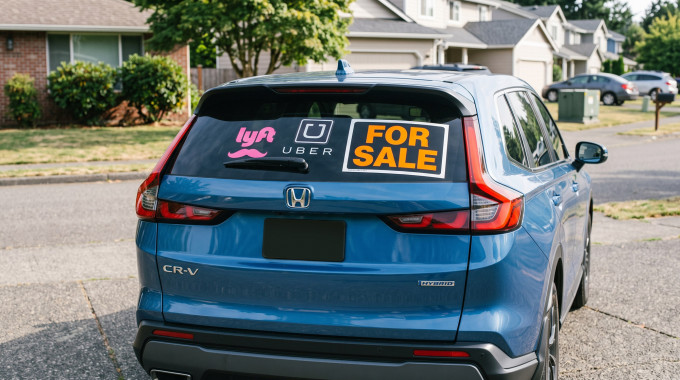
Selling a car that's spent months or years shuttling passengers, delivering food, or hosting Turo guests takes a bit more prep than a typical private sale. Here's what Canadian gig drivers need to know before listing a former Uber, Lyft, or Turo vehicle.
TL;DR: Yes, you can sell a car that's been used for Uber, Lyft, Uber Eats, DoorDash, SkipTheDishes, or Turo in Canada — there's no law against it. But before you list it, switch your insurance back to a personal auto policy, pull off any decals or mounted equipment, understand how high mileage affects your asking price, and check whether you owe tax on the sale if you claimed vehicle expenses against your gig income. If the car is leased, you'll also need a buyout quote before you can sell it.
Key Takeaways
- There's no legal restriction on selling a former rideshare, delivery, or Turo vehicle in Canada, but disclosing the commercial use upfront helps you avoid disputes after the sale.
- Rideshare use doesn't automatically flag a car as "commercial" on a CARFAX Canada vehicle history report, but accident and insurance claims filed while driving for Uber, Lyft, or Turo can still show up.
- High mileage from full-time gig driving is one of the biggest factors buyers and appraisal tools use to discount a used car's value, along with interior wear from passengers.
- You'll need to cancel your ride-for-hire endorsement or commercial policy and switch back to a personal auto policy once you stop driving for Uber, Lyft, or Turo.
- If you claimed capital cost allowance or other vehicle expenses against your gig income, selling the car can trigger a recapture you'll need to report to the CRA.
- Leased rideshare or delivery vehicles need a buyout quote from the leasing company before you can sell to a private buyer or a service like Canada Drives.
Can You Sell an Uber, Lyft, or Turo Vehicle in Canada?
Yes. Nothing in Canadian law stops a gig driver from selling a car previously used for rideshare driving, food delivery, or Turo hosting. Whether you drove for Uber or Lyft, delivered as a delivery driver for Uber Eats, DoorDash, or SkipTheDishes, or hosted trips through Turo's peer-to-peer car sharing marketplace, the vehicle is yours to sell once any loan or lease is settled. Before you list it, deactivate it from the Uber app or your Lyft driver account and remove it from your Turo listings so a new owner isn't accidentally booked for a trip. The bigger question for most rideshare drivers isn't whether they can sell — it's how to do it without leaving money on the table or surprising the buyer.
What You Have to Disclose to a Buyer
Private used car sales in Canada generally follow a "buyer beware" principle, but that doesn't give sellers a free pass to misrepresent a vehicle. If you know your car spent two years in near-constant rideshare driving or commercial delivery, it's worth mentioning, even if there's no specific box to check. A vehicle history report from CARFAX Canada pulls together registration history and previous use, accident and damage claims, odometer readings, and any liens — but personally registered rideshare vehicles typically continue to show up as personal-use vehicles rather than commercial ones, since most Canadian insurers don't report ride-hailing activity as a separate use category. That means the heavy use behind the wheel might not appear anywhere on paper. Pulling your own report before you list the car lets you see exactly what a buyer will see, and being upfront about the rest builds trust that a clean-looking report alone can't.
How High Mileage and Wear Affect Your Vehicle's Value
The average Canadian driver puts on somewhere in the range of 15,000 to 18,000 kilometres a year. Full-time gig drivers routinely log two to three times that. Since the odometer reading is one of the first things a buyer or an appraisal tool checks, high mileage is one of the single biggest contributors to resale value drop on a former rideshare car. Valuation tools like Canadian Black Book and Canada Drives' own online appraisal weigh mileage in bands, so crossing a threshold like 100,000 or 150,000 km can shave more off your offer than the extra kilometres alone would suggest. Interior wear compounds the problem: stained upholstery, worn seat bolsters, scuffed door panels, and lingering food odours from passengers or delivery bags are common on high-use rideshare and delivery vehicles, and appraisers factor condition in right alongside mileage. A thorough deep clean and pre-sale detailing job before you get an appraisal or take photos can meaningfully change the number you're offered.
Removing Decals, Dash Cams, and Other Rideshare Equipment
Before you hand the keys over, walk through the car and remove anything tied to your gig work. Uber and Lyft trade dress is usually a removable window placard rather than permanent branding, but decal removal can still leave adhesive residue that's worth cleaning off the glass. Pull any dash cam and its wiring, a suction-cup phone mount, and other accessory equipment like insulated delivery bags for Uber Eats, DoorDash, or SkipTheDishes, phone chargers, or tablet holders. Beyond tidying up the sale, clearing out this gear removes any lingering visual cue that hints at the car's commercial past, which pairs naturally with the disclosure conversation above.
Switching From Commercial to Personal Insurance Before You Sell
Most Canadian rideshare drivers don't carry a full commercial insurance policy. Instead, they add a ride-for-hire endorsement on top of their existing personal auto policy to cover the gap between personal driving and app-based trips. The exact name and structure of this coverage varies by province: Manitoba drivers need Passenger Vehicle for Hire coverage through MPI, several provinces require a Class 4 licence for rideshare driving, and Manitoba's own licensing runs on a Class 1 to 5F Manitoba scale. For the full province-by-province breakdown, our guide on how to become an Uber driver in every province covers the licensing and insurance requirements in more detail.
Once you stop driving for commercial purposes, call your insurer to have yourself removed as the insured party on the ride-for-hire or commercial endorsement and switch back to a standard personal policy — ideally the same week you deactivate from the app. If you handled your account setup or vehicle inspection through an Uber Greenlight Hub, that's also where many drivers go to formally close out their account. And if the new premium comes as a surprise, our roundup of ways to get cheaper car insurance is a good next stop.
Tax Implications of Selling a Vehicle You Used for Gig Work
If you claimed vehicle expenses against your Uber, Lyft, delivery, or Turo host income, the CRA treats those earnings as CRA business income, and selling the vehicle is a taxable event you need to report. If you claimed capital cost allowance (CCA) — the CRA's mechanism for depreciating a business-use vehicle over time — the sale proceeds get measured against what's left of that undepreciated balance, and the outcome depends on your specific personal use portion, typically established through a mileage logbook tracking business versus personal kilometres. Depending on how the numbers land, you could owe recaptured CCA as additional income or be entitled to a loss. It's also worth knowing that commercial ridesharing drivers must register for GST/HST regardless of how much they earn; the usual $30,000 small-supplier exemption doesn't apply to ride-hailing income the way it does for most other self-employment. Because the exact calculation depends on your specific logbook, CCA class, and prior claims, this is genuinely a "talk to an accountant" situation rather than one with a one-size-fits-all number. For general background, see our guides on CRA-approved vehicle expenses and getting a bigger tax return.
Selling a Leased Uber or Lyft Vehicle
If your rideshare or delivery car is leased rather than owned, you can't sell it directly to a private buyer or to Canada Drives until you get a buyout quote from the leasing company. Heavy gig-driving mileage is also worth double-checking against your lease's annual allowance, since rideshare and delivery driving can quietly blow past the kilometres built into a typical lease, leading to excess-mileage charges at buyout or lease-end. Our full walkthrough on how to sell a leased car in Canada covers the buyout process step by step, and if your loan or buyout balance comes in higher than your offer, it's worth knowing you may not have to pay the difference upfront.
Turo Hosts: Damage Claims, Where to Sell, and How to Price Your Car
A Turo host shares their personal vehicle through Turo's marketplace and, depending on the plan chosen, earns a percentage of each trip's price. Every trip in Canada includes third-party liability coverage plus a host protection plan that reimburses eligible physical damage up to the vehicle's actual cash value, minus a deductible that varies by the plan the host selected. If your car has an open or recently settled guest damage claim, get it fully repaired and keep the paperwork before listing the car; unresolved bodywork is one of the fastest ways to tank a private sale, and repair records give a buyer confidence if the damage does turn up on a vehicle history report.
Once the car is clean, repaired, and ready, you've got a few ways to sell it:
| Option | Best for | Trade-off |
|---|---|---|
| Canada Drives instant appraisal | Selling quickly with no listing hassle | One firm offer rather than negotiated bids |
| Private listing (Kijiji Autos, AutoTrader, Facebook Marketplace) | Potentially higher price | More time, showings, and negotiation |
| Dealership trade-in | Rolling straight into your next vehicle | Typically the lowest offer of the three |
However you sell it, price the car the same way you would any high-mileage rideshare vehicle: get a valuation that accounts for hosting mileage and wear rather than relying on the sticker price you paid.
What to Drive Next: Buy, Rent, or Keep Earning
Selling your car doesn't have to mean stepping away from gig work. If you want to own a car outright rather than rent, getting pre-approved for financing before you shop is the faster route back into car ownership. If you need something sooner, Uber's Vehicle Marketplace lists road-ready cars and rental options built specifically for active drivers — rideshare drivers without their own vehicle can rent through Uber's partner rental companies, including Hertz, on a weekly basis in a growing number of Canadian cities, with more cities coming online as the program expands. These rental agreements typically require a credit card in your own name (prepaid and debit card options usually aren't accepted) and an active Uber driver account in good standing. Pricing can vary depending on the vehicle, city, and rental partner, so it's worth comparing a short-term rental car against buying outright based on how long you plan to keep earning money on the platform. Many gig workers find that once they're driving consistently, owning ends up cheaper than a standing weekly rental.
Canada Drives provides a safe and convenient solution for Canadians who want to sell their car. With Canada Drives you can skip the hassle of online marketplaces, dealing with tire-kickers and no-shows, and the uncertainty of meeting with strangers to sell your car. Complete our easy online appraisal form to see what your car is worth and sell your car directly to Canada Drives today.
FAQ
Can I sell my car if I've been using it for Uber or Lyft?
Yes. There's no legal restriction on selling a former rideshare vehicle in Canada. Just make sure any loan or lease is settled first, and deactivate the car from your driver account before handing over the keys.
Do I have to tell the buyer I used my car for rideshare or delivery driving?
There's no specific disclosure form for this, but misrepresenting a vehicle's condition or history can expose you to a dispute later. Most sellers find it's simpler, and fairer, to mention the commercial use upfront.
Will rideshare or delivery use show up on a CARFAX Canada report?
Not automatically as "commercial" use, since most insurers don't report ride-hailing activity as a separate category. Accident claims and damage filed during that time, however, can still appear.
Do I need to switch insurance before I sell my rideshare car?
Yes. Once you stop driving for Uber, Lyft, or Turo, contact your insurer to cancel the ride-for-hire endorsement or commercial coverage and switch back to a personal auto policy.
Do I owe tax when I sell a car I used for gig work?
Possibly. If you claimed capital cost allowance or other vehicle expenses against your gig income, selling the car can trigger a recapture that needs to be reported. An accountant can run the numbers based on your logbook and CCA history.
Can I sell a leased rideshare vehicle?
Yes, but you'll need a buyout quote from the leasing company first. Heavy gig-driving mileage can also trigger excess-mileage charges, so it's worth checking your lease terms before deciding whether to buy out and sell, or simply return it.
People Also Ask
How much does high mileage lower a car's resale value in Canada?
It varies by vehicle and market, but crossing common mileage thresholds like 100,000 or 150,000 km tends to bring a bigger drop in offer price than the incremental kilometres alone would suggest, since appraisal tools price mileage in bands.
What's the difference between commercial insurance and a rideshare endorsement?
A full commercial policy is built for vehicles used primarily for business. A ride-for-hire endorsement, more common among Canadian rideshare drivers, is a smaller add-on to a personal auto policy that fills the coverage gap during app-based trips.
Is a Turo host considered self-employed for tax purposes?
Turo hosting income is generally reported as self-employment or business income to the CRA, similar to rideshare earnings, and related vehicle expenses can typically be claimed against it.
How do I remove my Uber or Lyft account before selling my car?
You can typically deactivate or update your vehicle details directly in the driver app, or through an Uber Greenlight Hub if you need in-person help.
Related Prompts
- "How do I switch my car insurance from rideshare back to personal use in Ontario?"
- "What should I disclose when selling a car I used for Uber Eats or DoorDash deliveries?"
- "How does the CRA tax the sale of a vehicle I used for gig work?"
- "Best way to sell a high-mileage former rideshare car in Canada."
- "How do I get a fair price for a car with Turo hosting damage?"
About Canada Drives
Canada Drives provides a safe and convenient solution for Canadians who want to sell their car. With Canada Drives you can skip the hassle of online marketplaces, dealing with tire-kickers and no-shows, and the uncertainty of meeting with strangers to sell your car. Complete our easy online appraisal form to see what your car is worth and sell your car directly to Canada Drives today.